Quick List & Links
- Backwater Kayaking
- Watch fishermen
- Sree Mahadeva Temple
- Backwater Day Cruise
- Village Cycling
- Ayurvedic Treatment
- Seafood
- Coir Museum
- Kalaripayattu
- Mohinayattam/Kathakali
- Alleppey Beach
- Kumarakom Bird Watching
- Coconut Farm
- Beach Sunset
Marari Beach — officially Mararikulam — is one of the most quietly compelling destinations on Kerala’s coast. Tucked between Alleppey and Kochi, 11 km south of Alappuzha town, it is the kind of place that rewards those who slow down. National Geographic once listed it among the world’s top five hammock beaches, and the description still holds: long stretches of white sand, barely a tourist shack in sight, coconut palms angling over the waterline, and fishermen hauling nets by hand just as they always have.
But Marari is not just a beach to lie on. Within a 30-minute radius, you have the Alleppey backwaters, centuries-old temples, ancient Ayurvedic treatments, farm kitchens, and one of the most unique kayaking experiences in South India. This guide covers all of it — the right way to spend your time here, what to actually prioritise, and the experiences you will not find in the usual Kerala itineraries.
Quick summary: The best time to visit Marari is November to March, when the weather is dry and the sea is calm. The activities here range from genuinely free (beach walks, fishing village strolls) to boutique (Ayurvedic retreats, sunrise kayaking). You can fill three to five days without running out of things to do.
1. Kayak the Alleppey Backwaters at Sunrise with Nadodi Kayaking

If you only do one active experience near Marari, make it this. Nadodi Kayaking operates the only island-circuit kayak tour in the Alleppey backwaters, and is about 15 minutes from Mararikulam by road — the closest premium kayaking experience to the beach.
Our sunrise kayaking (5:30 AM to 8:30 AM, with a 5:00 AM meetup), and the timing is deliberate. On the water before the light settles in, you are paddling through Punnamada lake and narrow village canals while the mist still sits on the water. Bird islands. Paddy fields at the edge of vision. Fishing boats drifting past. No other tourists on the route.
We also have a sunset tour if you’re interested. But sunrise timing would probably fit your itinerary the best, and is also the best time to do kayaking in Alleppey.
There are two route options: the Long Island Circle (6.5 km, circumnavigating an entire island village through narrow canals and open backwaters) and the Chill Route (3.5 km, a relaxed paddle to the sunrise viewpoint and bird islands). Both include a trained guide, life jackets, a safety briefing, a boat transfer to the island, and a tea and snack break. No prior kayaking or swimming experience is needed — the kayaks are designed for first-timers.
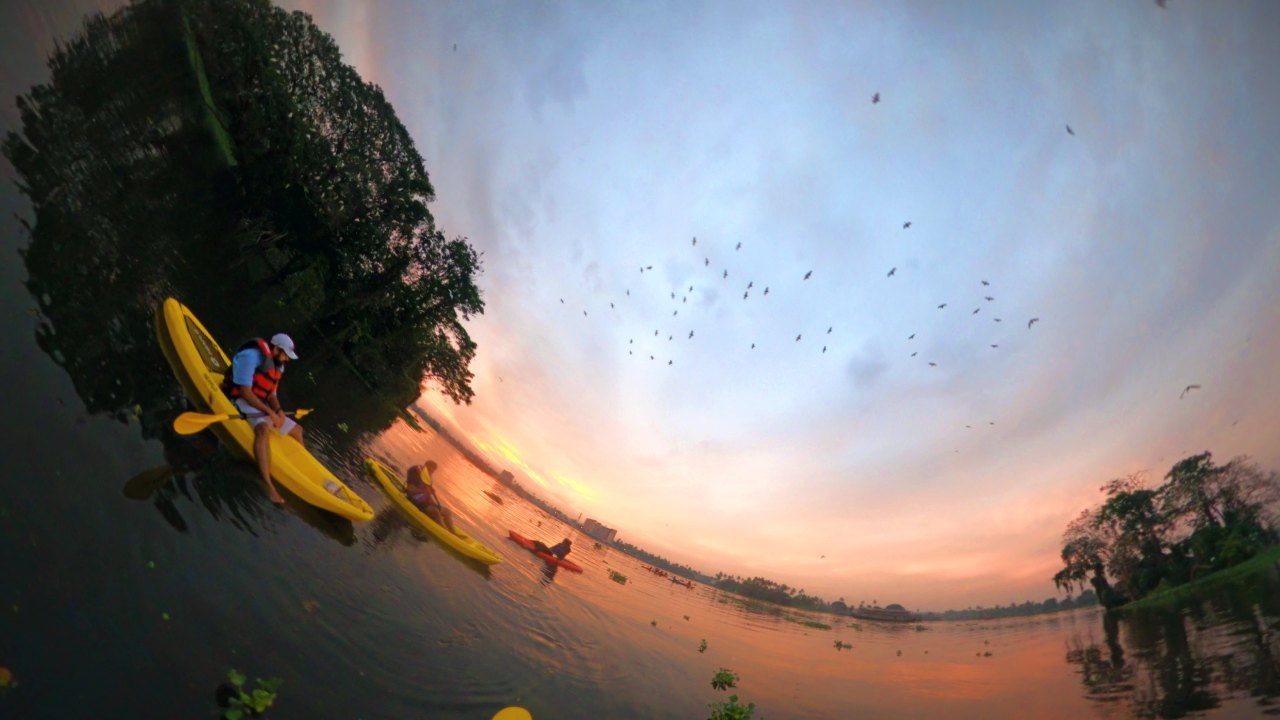
Nadodi holds a 4.9/5 rating across 1,843+ reviews, making it one of the highest-rated experiences in the entire Alleppey district. Pricing is ₹1,500 per person for either route.
You can book via WhatsApp: +91 98472 62585 or through our website at nadodikayaking.com.
2. Watch the Fishermen at Dawn
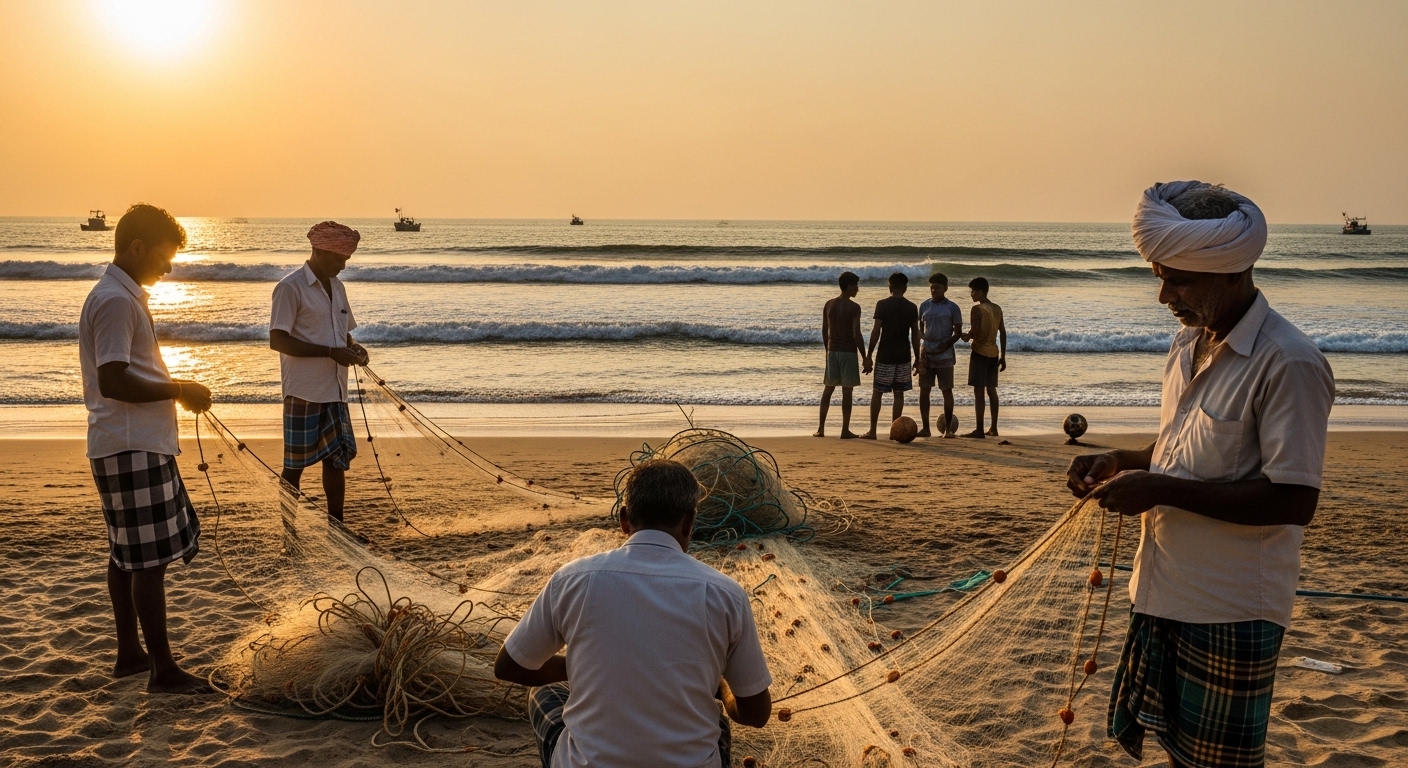
Mararikulam is an active fishing village, and the beach is at its most alive in the early morning. By 5:30 to 6:30 AM, the traditional wooden vallam boats return to shore, and teams of fishermen pull in the nets by hand in a long, slow rhythm. Brahminy kites circle low overhead, diving to snatch fish. The light is extraordinary.
This is not a curated cultural show — it is simply daily life on a working beach. You can watch from a respectful distance, or if the fishermen are feeling generous, they may let you join them. Some visitors have been invited onto the boats for a short trip out to sea. Nothing is guaranteed, but the early morning energy of this beach is unlike anything at more developed Kerala resorts.
The experience costs nothing. Just be there before 7 AM.
3. Explore the Sree Mahadeva Temple
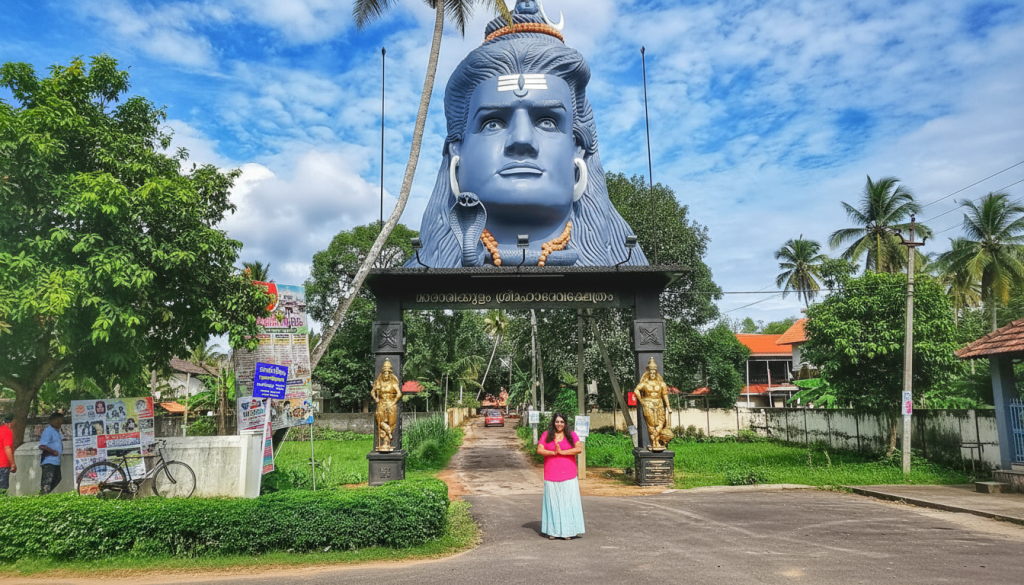
Mararikulam is home to the Sree Mahadeva Temple, one of the oldest and architecturally distinct temples in Kerala. What makes it remarkable — and unique in India — is that it is the only known temple where the deities Shiva and Parvati are installed facing each other. The traditional Kerala temple architecture, with its sloping tiled roofs and intricately carved wooden interiors, is worth seeing even for visitors with no particular religious interest.
Dress modestly (shoulders and knees covered), remove footwear before entering, and check local timings — most Kerala temples close for a midday break between approximately 12 PM and 5 PM, with morning darshan starting around 5:30 AM.
4. Take a Backwater Day Cruise
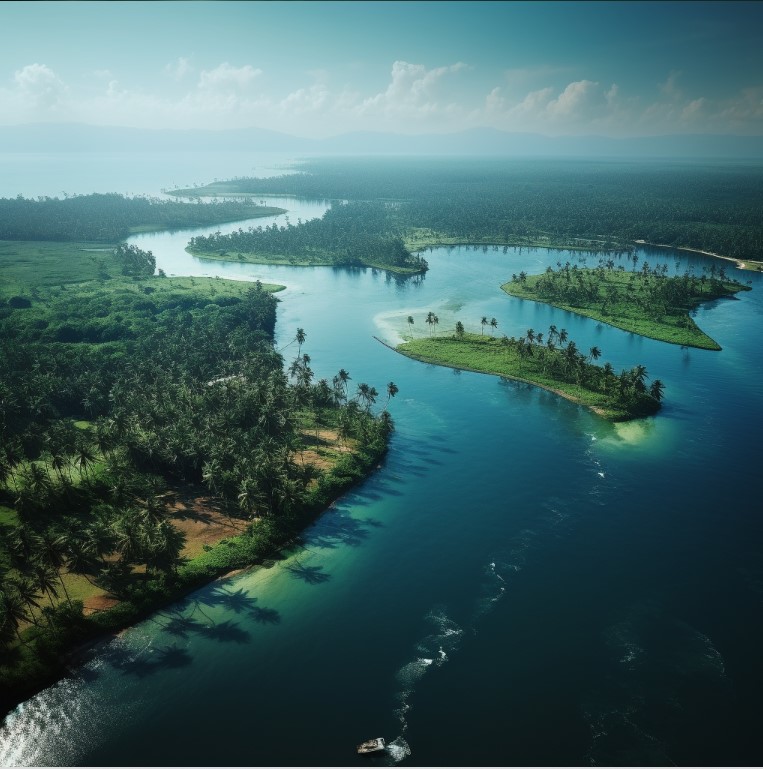
The Alleppey backwaters are a short drive from Marari and represent the defining Kerala landscape: a 900 km network of canals, lakes, and rivers running parallel to the coastline, edged with palms and rice paddies, dotted with churches, mosques, and villages connected by hand-paddled ferries.
A day cruise on a traditional houseboat (Kettuvallam) gives you a different scale of experience than kayaking — you’re on the water for three to four hours, drifting through larger waterways, stopping at Vembanad Lake, and often passing the famous Nehru Trophy houseboat race route. Unlike an overnight houseboat stay (which most visitors do in Alleppey town), a half-day cruise from near Marari keeps you moving and gets you back to the beach by afternoon.
For a more intimate version, a traditional hand-paddled canoe through the narrow village canals reaches places a houseboat cannot — lily-covered inlets, low bridges, and canal-side homes just metres from the water.
5. Walk (or Cycle) Through the Village
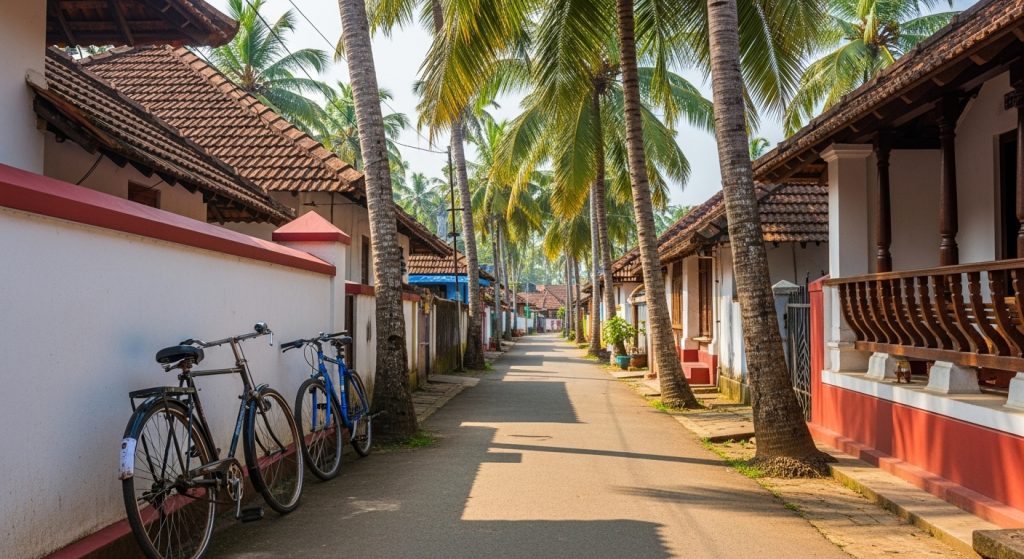
Mararikulam village moves at a genuinely different speed from the coastal resort strip. Quiet palm-lined streets. Colourful churches. Local women drying fish. Children cycling to school. Old men playing cards in the shade of the thattukada.
Walking the village — or renting a bicycle from most homestays for ₹100–150 per day — is the most unscripted thing you can do here, and often the most memorable. The village is safe and friendly, and locals are generally happy to exchange pleasantries if not conversation.
Head toward the fishing harbour in the late afternoon for the reverse of the morning scene: boats being prepared, nets repaired, the day winding down in the particular unhurried way that coastal Kerala does.
6. Book an Ayurvedic Treatment

Kerala’s Ayurvedic tradition is not a spa add-on — it is a 3,000-year-old medical system that the state has practiced without interruption, and Marari is one of the better places in Kerala to access it properly. The CGH Earth Marari Beach Resort operates one of the most respected Ayurvedic centres in the region, staffed by resident doctors who assess and prescribe treatments rather than simply offering menu massages.
Treatments range from a simple Abhyanga (full-body oil massage with two therapists working in synchronised rhythm) to multi-day Panchakarma detox programs. If you are coming specifically for Ayurveda, book your consultation in advance — the better practitioners fill up fast in the November–February peak season.
Day visitors can book treatments without staying at the resort, though it is worth calling ahead.
7. Eat Fresh Kerala Seafood
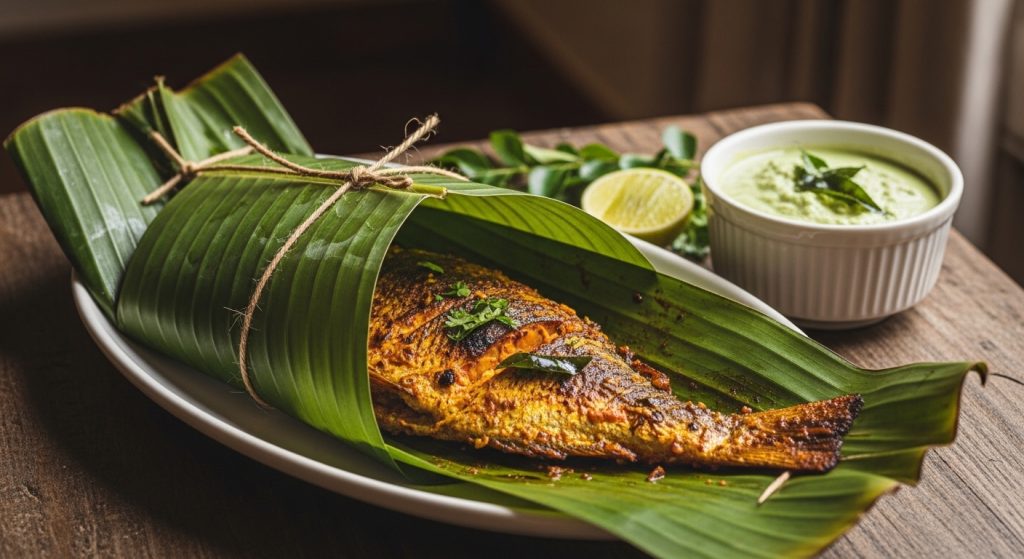
The food at Marari is not a highlight you stumble into — you have to seek it out. But when you find it, it is exceptional.
Karimeen pollichathu is the dish to know: pearl spot fish, marinated in a red masala, wrapped in banana leaf, and roasted on a coal fire. It is technically a freshwater fish from the backwaters, and the version you get in Mararikulam is often caught that morning. Prawn masala curry, mango prawns, crab with coconut — the menu changes with the catch.
Recommended spots: Sea Lap Beach Restaurant (known for prawn and mango curry), The Fisherman’s Cafe (pollichathu and fish fry), and the small beachside shacks at the north end of the beach that sell fresh green coconut and fried snacks. Most homestays and guesthouses also serve home-cooked Kerala meals if you request them in advance.
For the full experience, some resorts and homestays offer cooking classes where you learn to prepare Kerala seafood dishes — typically using the catch from the morning’s boats and coconut from the garden.
8. Visit the International Coir Museum, Alleppey
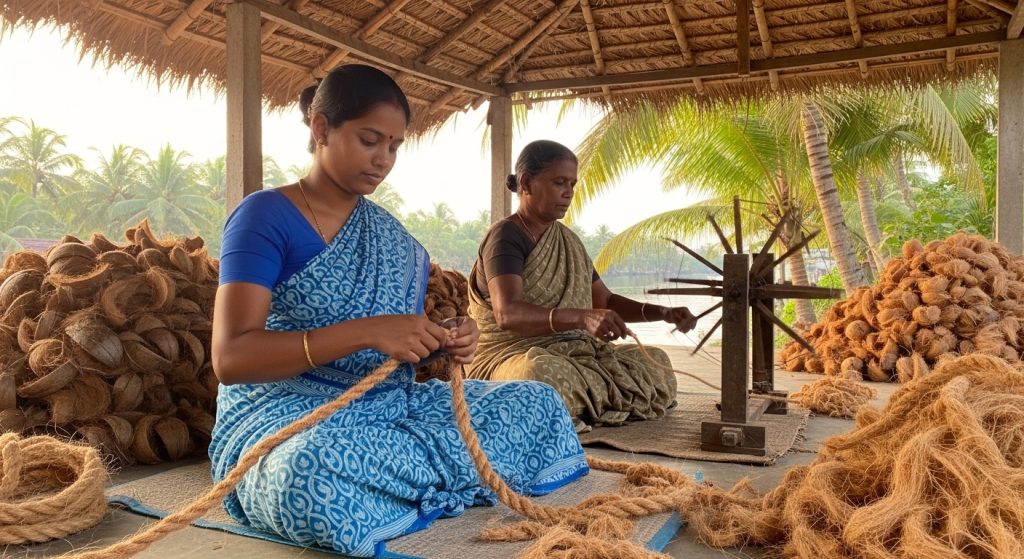
About 11 km from Marari in Alleppey town, the International Coir Museum documents the history and craft of Kerala’s coir industry — the processing of coconut husk fibre into rope, mats, and fabric that has underpinned the coastal economy for centuries. It is more interesting than it sounds: the machinery is old and tactile, the process demonstrations are hands-on, and the context it provides for the coconut plantations you have been walking through all week is genuinely illuminating.
Entry is inexpensive (around ₹30 for adults) and the museum is easy to combine with a half-day trip to Alleppey town.
9. Watch a Kalaripayattu Performance
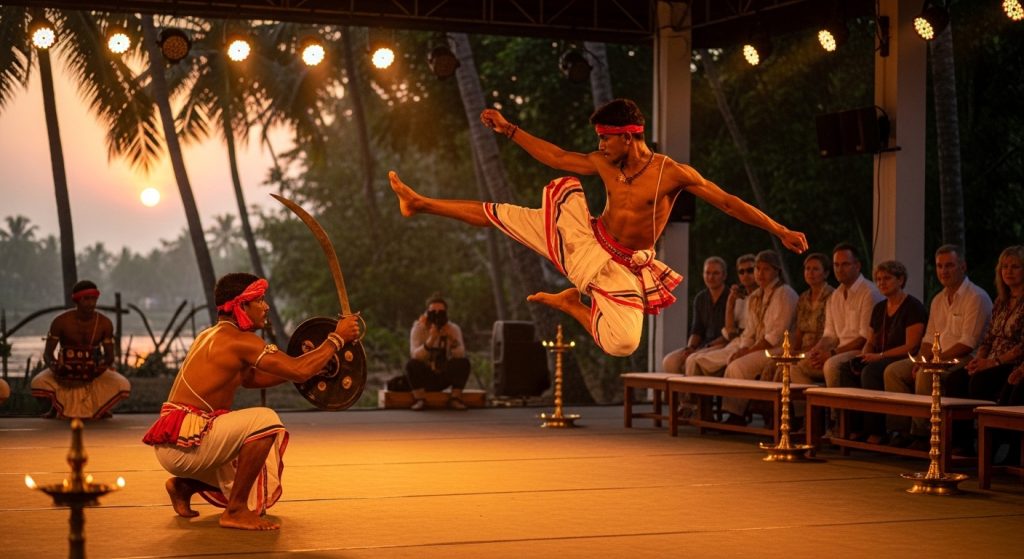
Kalaripayattu is the ancient Kerala martial art — considered by many historians to be one of the oldest codified fighting systems in the world, and cited as an influence on several Asian martial traditions. Live demonstrations are electrifying: the combination of acrobatic kicks, weapon work with swords, spears, and flexible urumi blades, and the eerie precision of the footwork makes it unlike any performance you have seen.
Several Alleppey venues and some Marari resorts organise performances, particularly for guests. CGH Earth’s Marari Beach Resort occasionally hosts shows. Ask your guesthouse owner about current options — schedules change seasonally.
10. Watch Mohiniyattam or Kathakali
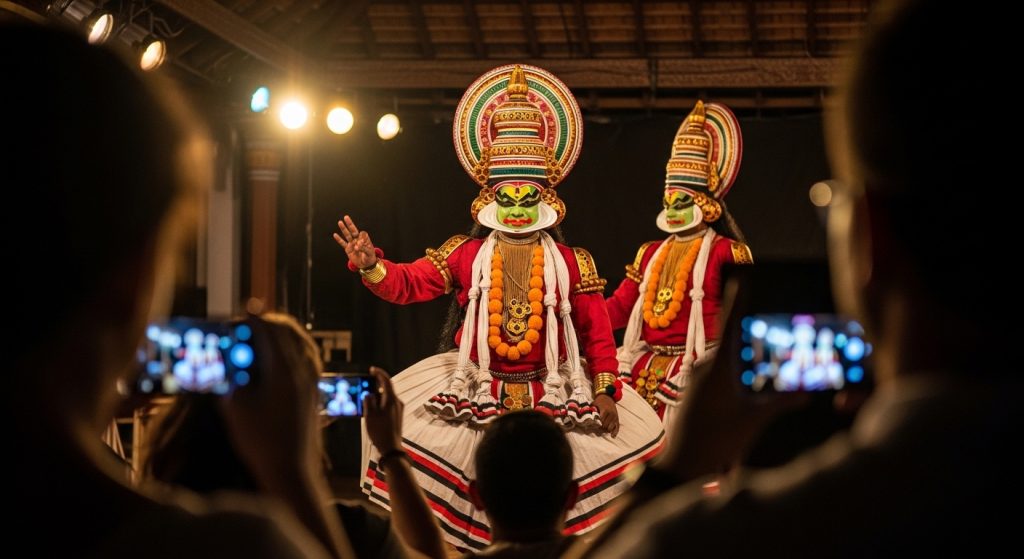
Two classical dance forms are deeply tied to Kerala’s cultural identity. Mohiniyattam (the “dance of the enchantress”) is fluid and feminine, characterised by slow, swaying movements and elaborate eye expressions. Kathakali is more dramatic — epic stories from the Mahabharata and Ramayana performed in vivid painted face makeup, with each expression and hand gesture carrying specific narrative meaning.
Watching a full Kathakali performance, particularly the pre-show makeup ceremony where dancers transform over 90 minutes, is one of those experiences that takes time to fully register. Kerala Kathakali Centre in Kochi is the most organised venue, but for travellers based in Marari, performances also run in Alleppey town.
11. Visit Alleppey Beach and the Old Pier
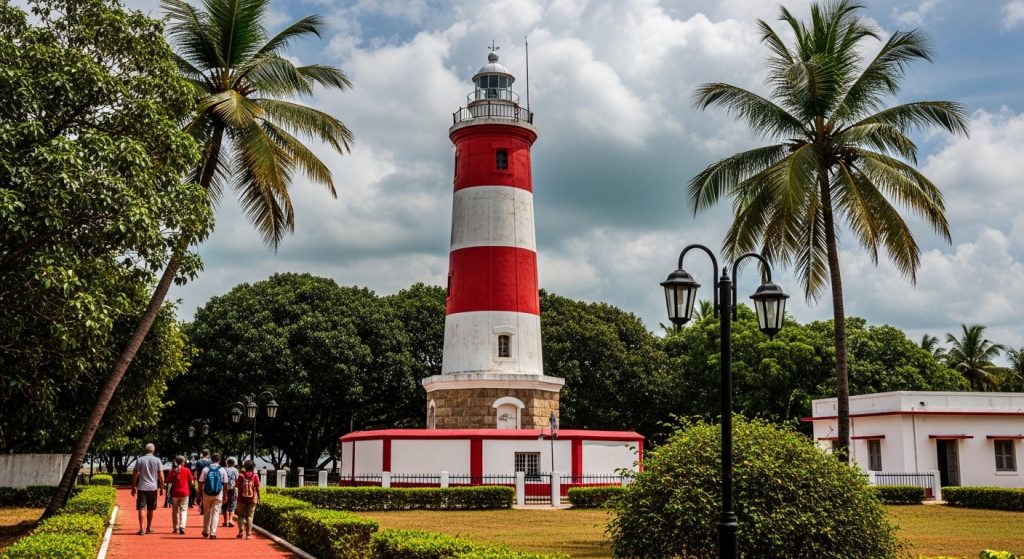
The beach at Alleppey town (11 km from Marari) is a different experience from the quiet of Mararikulam — busier, more urban, with food stalls and autorickshaws — but the Alleppey Lighthouse (built 1862) and the old pier stretching into the sea are genuinely atmospheric. The lighthouse is open to visitors and the climb to the top gives you a panoramic view of the coastline and the backwater inlets behind the town.
Worth a half-day trip, particularly if combined with the Coir Museum and lunch at one of the seafood restaurants on the harbour road.
12. Birdwatch at Kumarakom Bird Sanctuary
About 25–30 km from Marari, the Kumarakom Bird Sanctuary occupies 14 acres on the shores of Vembanad Lake and is one of the most important wetland bird habitats in South India. Between October and February, migratory species arrive from Siberia, the Himalayas, and East Asia — including Siberian cranes, egrets, herons, teal, and the occasional painted stork.
The sanctuary is at its best in the early morning (gates open around 6 AM), and a guided boat safari through the flooded forests is more productive than walking the trails. A half-day trip from Marari pairs well with a stop at Kumarakom village on the return.
13. Visit a Local Coconut Farm or Organic Garden
Several Marari resorts — including CGH Earth’s Marari Beach Resort — maintain working organic farms and gardens from which kitchen ingredients are sourced. Guests can take guided tours, learn about Kerala’s traditional agricultural practices, and occasionally participate in harvesting or cooking with what’s grown on-site.
It is a low-key experience but quietly satisfying, particularly for families or travellers interested in slow food and sustainable agriculture. Ask about farm visits when booking your accommodation.
14. Sunset at the Beach
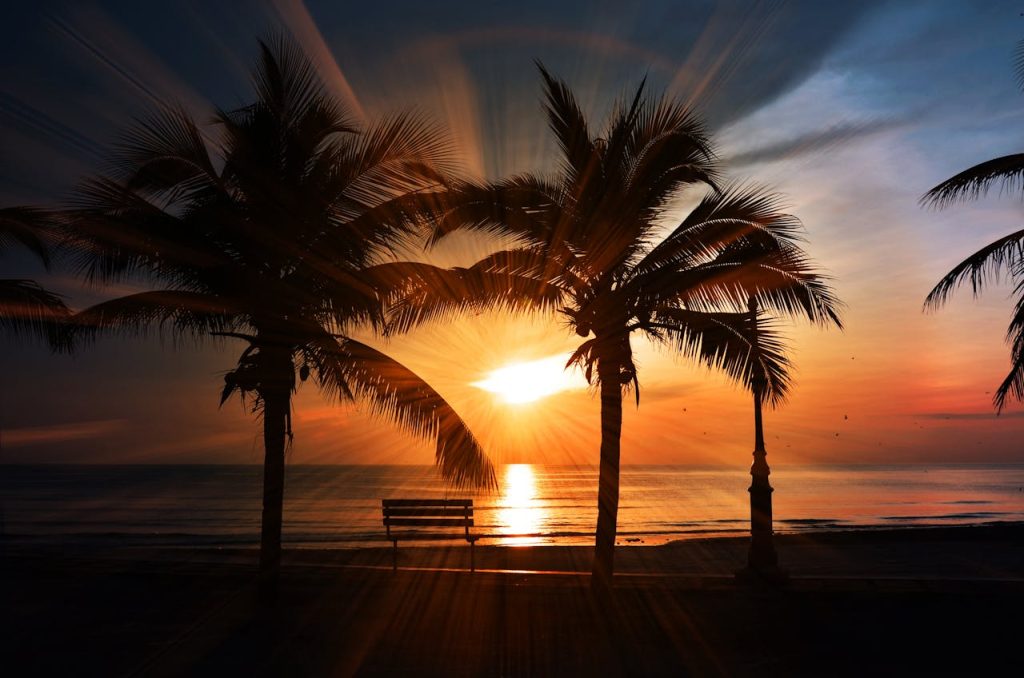
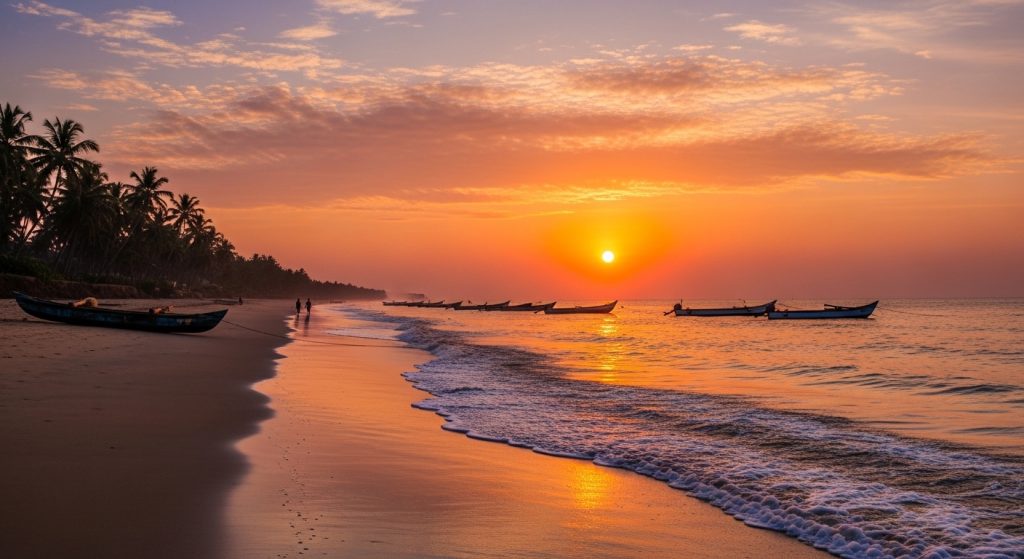
This one is last because it needs no explanation, but it would be dishonest to omit it. The sunset at Marari Beach faces west across the Arabian Sea with nothing between you and the horizon. On clear evenings in winter, the light does things to the water that are difficult to describe without sounding overcooked. The fishermen come out. The kites circle lower. The coconut palms go dark against the orange sky.
It is the kind of moment that reminds you why you travelled here in the first place.
Practical Information for Marari Beach
Best time to visit
November to March. Weather is dry and cool, sea conditions are manageable, and daylight is ideal for outdoor activities. April to June is pre-monsoon and increasingly hot. Monsoon (July–September) is dramatic but heavy rainfall limits activities.
How to get there:
The nearest airport is Cochin International Airport (90 km, approximately 2 hours by taxi). Mararikulam has its own railway station (code MAKM) with connections to major Kerala cities. By road, Marari is 11 km south of Alleppey town on NH 66 — taxis, auto-rickshaws, and local buses connect easily.
Getting around:
Most attractions are reachable by auto-rickshaw or taxi from Marari. Bicycles are the best way to explore the village itself. For the kayaking tour, Nadodi Kayaking assists with transport coordination.
Where to stay:
Options range from the CGH Earth Marari Beach Resort (barefoot luxury, strong Ayurvedic program) to Abad Turtle Beach Resort (pool, Ayurveda, beachfront), boutique eco-villas, and locally-run homestays. Homestays, particularly those run by fishing families, give you a more direct connection to village life and usually the best home-cooked food.
FAQ
Is swimming safe at Marari Beach? Use caution. The Arabian Sea currents can be strong, particularly outside the November–March window. Most resorts and guides recommend swimming in the pool or wading cautiously rather than deep-water swimming. The beach is perfect for walking and sitting by the water regardless.
How far is Nadodi Kayaking from Marari Beach? Approximately 15 minutes by road, departing from the Punnamada area near Alleppey town. Nadodi Kayaking can advise on the best meetup and transport options when you book.
Is Marari Beach good for families? Yes. The beach is uncrowded, the village is safe, the pace is slow, and resorts offer child-friendly activities. Kayaking with Nadodi is suitable for all ages and no experience is required.
Is Marari Beach crowded? Significantly less so than Goa or Kovalam. Even in peak season (December–February), the beach retains a quiet character. That said, accommodation fills up quickly — book at least four to six weeks ahead for the best properties.
What is the difference between Marari and Alleppey? Marari (Mararikulam) is a fishing village 11 km south of Alleppey town. Alleppey (Alappuzha) is the main hub for overnight houseboat stays and has more tourist infrastructure. Marari is quieter, more village-focused, and better suited to those who want to decompress rather than see sights. Many travellers base themselves at Marari and do day trips to Alleppey for backwaters experiences.
Getting to Marari from Alleppey town takes about 20 minutes by auto-rickshaw. From Kochi (Cochin), the drive is around 1.5 to 2 hours depending on traffic.