Kochi rewards travellers who know what to look for — and confuses those who don’t. Most visitors land, tick off the Chinese Fishing Nets, and leave wondering what all the fuss was about. That’s a shame, because this city layers 600 years of Chinese, Portuguese, Dutch, Jewish, and British history into a single square kilometre of Fort Kochi, and backs it up with some of the most serene waterways in Asia just an hour down the road.
This guide covers the best things to do in Kochi — in the city, along the coast, and on the backwaters — including a full one-day itinerary for first-timers and cruise passengers with limited time.
What Makes Kochi Worth Your Time
Kochi — also called Cochin — is Kerala’s commercial capital and one of South India’s most historically layered cities. It sits on a series of islands and peninsulas at the mouth of the Periyar River, where the Arabian Sea meets the Kerala backwaters. That geography alone makes it unusual: a city where you can cross between neighbourhoods by public ferry for ₹5.
What sets Kochi apart is the concentration of cultures compressed into Fort Kochi and Mattancherry, its heritage districts. The Chinese fishing nets on the shoreline date to the 14th century. St. Francis Church, built in 1503, is the oldest European church in India. The Paradesi Synagogue, constructed in 1568, is still an active place of worship. A Dutch colonial palace sits two minutes from a Jewish quarter that once thrived with spice merchants. This isn’t a reconstructed heritage zone — it’s genuinely lived-in and layered.
A note on orientation for first-timers: “Kochi” typically refers to the entire metro area, but most visitors spend their time in two districts: Fort Kochi (colonial heritage, art scene, beach) and Mattancherry (Dutch Palace, Jew Town, spice markets). These are across the water from the modern city of Ernakulam, where most hotels, the railway station, and the airport are. The two are connected by public ferry — a 10-minute ride.
Things to Do in Fort Kochi
Fort Kochi is the most photographed neighbourhood in Kerala for good reason. The streets are walkable, the architecture is colonial-era Portuguese and Dutch, and the light in the late afternoon turns everything amber.
Watch the Chinese Fishing Nets at Sunrise or Sunset
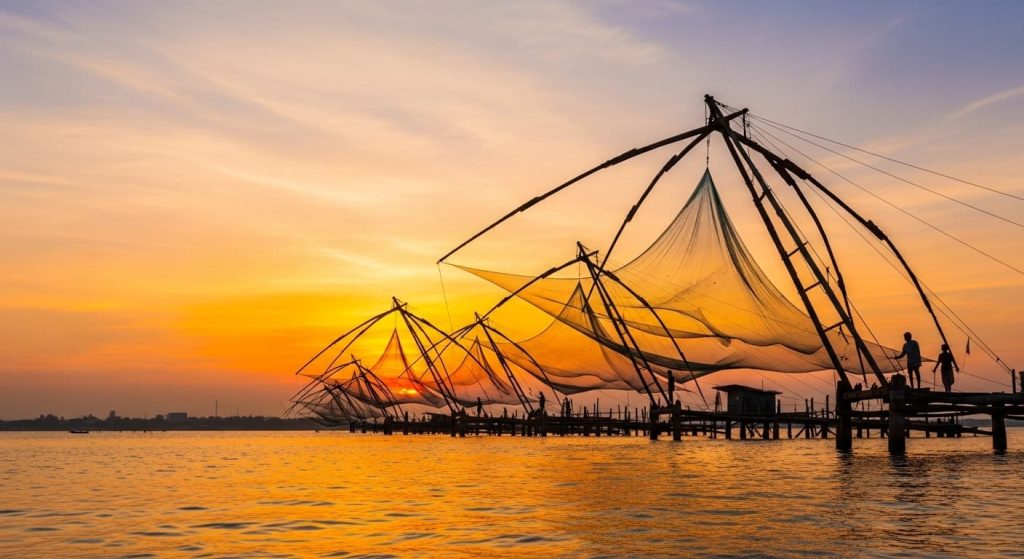
The Chinese fishing nets are Kochi’s defining image — giant cantilevered nets on wooden poles, counterbalanced by stones, operated by a team of fishermen who have used the same technique since the 14th century. Legend holds they were introduced by the traders from the court of Chinese explorer Zheng He.
The nets are at their best at sunrise and sunset, when the silhouette against the sky creates the shot every Kochi photo is taken to get. Early morning is quieter — by mid-morning they’re surrounded by tourists. You can buy freshly caught fish directly from the fishermen, then take it to a nearby restaurant that will cook it to order.
Walk the Colonial Streets of Fort Kochi
Princess Street and Napier Street are the heart of Fort Kochi’s colonial core. Walking them slowly — past Portuguese-era buildings, whitewashed walls layered with street art, independent cafes, and heritage homestays — takes an hour at a comfortable pace and costs nothing.
The Dutch Cemetery on Napier Street, one of the oldest European cemeteries in India, is worth stopping at. The Kerala Kathakali Centre on KB Jacob Road is where most visitors watch evening performances. Kashi Art Café on Burgher Street is a Fort Kochi institution — the coconut milk coffee alone justifies the stop.
The neighbourhood is compact enough to walk. A tuk-tuk is worth hiring if you want to cover Fort Kochi and Mattancherry in the same morning — budget ₹200–300 for a couple of hours. Be aware that some drivers receive commissions from shops, so agree on your destinations upfront.
Visit St. Francis Church and Santa Cruz Basilica
St. Francis Church, built in 1503 by Portuguese Franciscan friars, is the oldest European church in India and a genuinely moving piece of history. Vasco da Gama, the Portuguese explorer who discovered the sea route to India, was buried here in 1524 before his remains were later taken to Lisbon. The current church is a simple, whitewashed structure — more remarkable for its age and story than its architecture.
Santa Cruz Basilica, a few minutes’ walk away, is the visual counterpart: a grand, ornate Catholic church with stained glass and a painted ceiling. Together, they frame the depth of Portuguese influence on this corner of Kerala.
Explore the Kochi Muziris Biennale
If your trip falls between December and March, the Kochi Muziris Biennale is one of Asia’s most significant contemporary art events — and almost no standard Kochi travel guide bothers to tell you this.
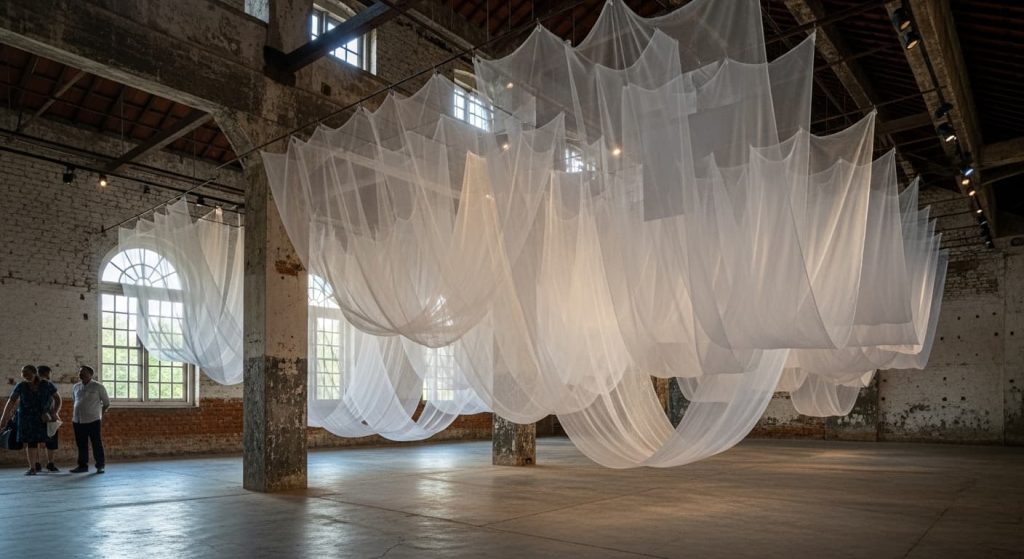
The Biennale uses Fort Kochi and Mattancherry as its canvas: heritage warehouses, colonial courtyards, and seafront buildings host large-scale installations from international and Indian artists. The 2025–26 edition, which runs until March 2026, is spread across venues including Aspinwall House, Pepper House, and Cabral Yard. Entry is low-cost and the work is serious — this isn’t a tourist-facing craft fair. Plan two to three hours minimum if you’re visiting; a full day if you care about contemporary art.
Things to Do in Mattancherry and Jew Town
Mattancherry is adjacent to Fort Kochi but distinct from it — more functional, less polished, more layered. It’s where the spice trade still happens in working warehouses alongside antique shops that have been family-run for generations.
Mattancherry Palace (The Dutch Palace)
Built by the Portuguese in 1555 as a gift to the Raja of Kochi, renovated by the Dutch in 1663, and maintained since — the Dutch Palace (officially Mattancherry Palace) is worth visiting for its murals alone. The interior walls are covered in some of the finest examples of Kerala mural painting in existence: vivid, detailed scenes from the Ramayana and Mahabharata rendered in natural pigments.
Entry is ₹5 for Indians and ₹10 for foreign nationals. Photography inside is not permitted, which means most tourists don’t stay long — you’ll often have the murals nearly to yourself.
Paradesi Synagogue and Jew Town Spice Market
The Paradesi Synagogue, built in 1568 and still active, is one of the oldest synagogues in the Commonwealth. The Jewish community of Kochi — known as the Malabar Jews — traded spices here for centuries; at its peak, Jew Town was one of the most commercially significant Jewish settlements in Asia. Today the community has largely emigrated to Israel, but the neighbourhood retains its character.
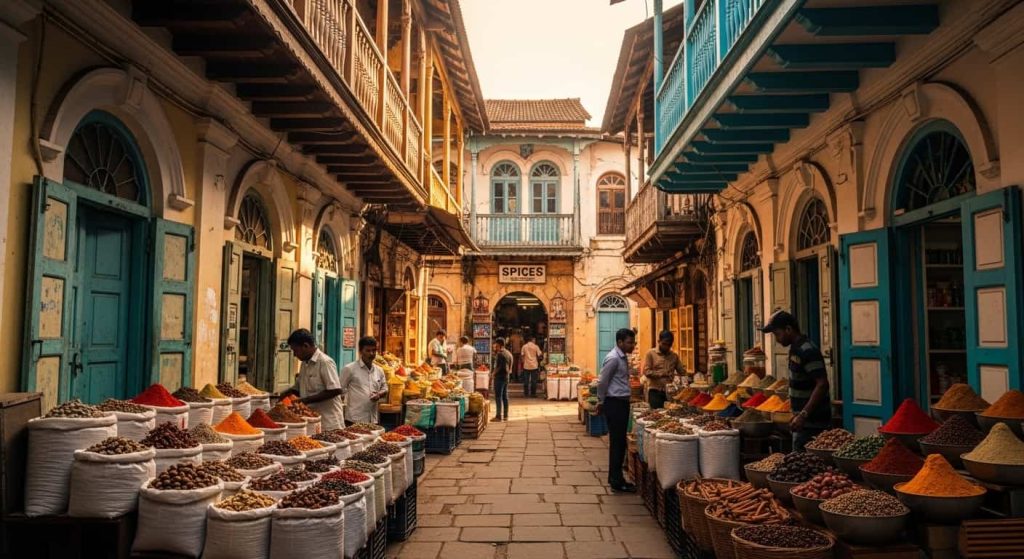
The streets around the synagogue are lined with spice shops selling cardamom, pepper, cloves, turmeric, and cinnamon — some of the same goods that brought European traders to this coast in the 15th century. The louder tourist-facing shops are on the main lane; the quieter wholesale godowns a street back are where locals still buy, and many will vacuum-pack spices for travel.
Browse the Antique Shops and Art Galleries
Jew Town’s antique trade is genuine — carved wooden furniture, bronze vessels, old maps, colonial-era silverware, Tanjore paintings, and temple artefacts fill shops that have been sourcing and selling for decades. Prices are negotiable and provenance varies, but the quality of stock here is higher than most Indian antique markets. Budget an hour to browse properly; buying anything takes longer.
For contemporary art, Fort Kochi has a cluster of small galleries around Princess Street and the area around Aspinwall House. Gallery OED and several pop-up spaces that operate during and around the Biennale are worth a look if you’re interested in Kerala’s contemporary art scene.
Cultural Experiences You Shouldn’t Skip
Kochi is one of the best places in India to engage with traditional performing arts — not because the performances are staged for tourists (though some are), but because the genuine traditions remain alive here in a way they don’t in most Indian cities.
Watch a Kathakali Performance
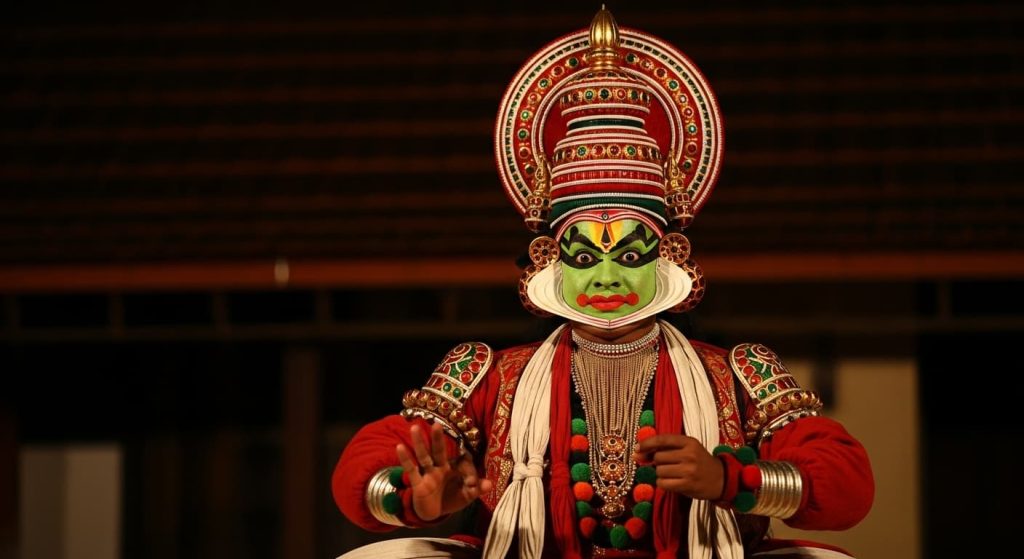
Kathakali is one of India’s nine classical dance forms and has its origins in Kerala. It is performed entirely through expression and gesture — no spoken dialogue — using a codified vocabulary of 24 mudras (hand gestures) and nine facial expressions to tell stories from the Ramayana and Mahabharata.
The Kerala Kathakali Centre in Fort Kochi runs daily performances and offers a pre-show demonstration of the makeup process — the elaborate face painting, done in layers of natural pigment, takes two to three hours and is worth watching even if you only catch 30 minutes of it. Most evening shows run 45 minutes to an hour. Cost is approximately ₹350 per person.
See Kalaripayattu — Kerala’s Ancient Martial Art
Kalaripayattu is Kerala’s 3,000-year-old martial art — considered by many scholars to be the world’s oldest surviving combat system, and a likely ancestor of several Southeast Asian and East Asian martial arts. It’s practised as both a functional fighting system and a performance art, and the combination of gymnastic agility, precision strikes, and weaponry makes it genuinely remarkable to watch.
Several centres in Kochi offer morning training sessions and evening demonstration shows. The ENS Kalari Centre in Fort Kochi and the CVN Kalari Sangham in Thiruvananthapuram are among the most respected. A 45-minute demo show costs ₹200–300. If you’ve never seen it, it’s easy to underestimate — within five minutes of a live demonstration, most visitors understand why it’s considered a major cultural inheritance.
Take a Kerala Cooking Class
This is one of the most asked-about experiences on Kochi travel forums and one of the least covered in standard travel guides. Kerala cuisine — seafood curries, fish molee, appam with stew, prawn thoran — is distinctive enough that learning to cook it is worth the three hours.
Maria’s Cooking Class, based in Fort Kochi, is a consistently well-reviewed option run by a local family out of a home kitchen. Classes typically involve a morning market visit to source ingredients, then two to three hours of cooking, finishing with a meal. Cost is around ₹2,500–3,000 per person including food. Book a few days in advance.
The Best Backwater Experience Near Kochi — Kayaking with Nadodi
Here’s what most Kochi itineraries get wrong about the backwaters: the famous Kerala backwaters aren’t in Kochi. They’re in Alleppey (Alappuzha), about an hour south. Kochi’s own waterways are scenic, but the network of interconnected lagoons, canals, paddy fields, and bird islands that defines the “Kerala backwater” experience begins in Alleppey — and that’s where you need to go to experience it properly.
The good news: Alleppey is an easy, well-signposted day trip from Kochi. The better news: there’s a way to do it that’s measurably better than the standard tourist houseboat.
Why Kayaking Beats a Houseboat for First-Timers
The Kerala houseboat (kettuvallam) is iconic, and an overnight stay on one is genuinely worthwhile if you have the time. But for a day visitor from Kochi, a houseboat tour has a structural problem: the boats are large, slow, and restricted to the main canals. They can’t enter the narrow village waterways where the real backwater life happens — the morning fishing, the children swimming, the birds nesting in the mangroves.
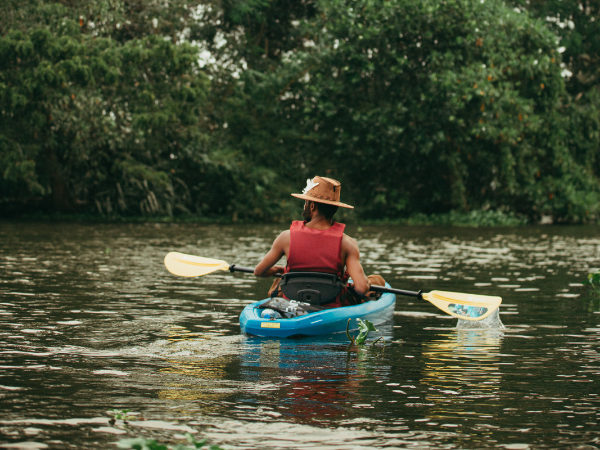
A kayak can. The narrow canals that connect backwater villages are only accessible by small craft, and a guided kayaking tour covers ground that no houseboat ever reaches. You’re moving slowly, at water level, in near silence — which means wildlife is undisturbed, villages feel uninterrupted, and the experience is genuinely immersive rather than observed from a deck with 10 other tourists.
Nadodi’s Sunrise Kayaking Tour: What to Expect
Nadodi Kayaking operates guided tours through the Alleppey backwaters that have become — based on 1,843+ Google reviews at a 4.9/5 rating — consistently cited as one of the best experiences in all of Kerala, not just Kochi.
The sunrise tour meets at 5:00 AM and launches onto the water by 5:30 AM. Over the next three hours, you’ll paddle through narrow canals between island villages, past paddy fields and bird nesting grounds, out onto the open backwaters to watch the sun rise over the water, and back through the village side for a floating tea-and-snacks break hosted by a local family.
What’s included: safety briefing and life jackets, experienced guide, a tea and snacks break at a backwater homestay, and the option to choose between two routes — the Long Island Circle (6.5 km, circles an entire island village) or the Chill Route (shorter, same sunrise viewpoint and bird islands).
Who it’s for: the tours are designed explicitly for beginners and non-swimmers. The water is calm, the routes are safe, and the guides are trained to make first-timers comfortable. Most participants have never kayaked before.
What makes it different: early morning in the backwaters means no motorboats, no crowds, and mist on the water. The village canals Nadodi uses are not on the standard tourist circuit — you’ll pass through working fishing communities, not staged displays. Travellers consistently describe the floating tea break, taken with paddles resting on the kayak while a local family serves chai from their doorstep, as the moment the trip becomes memorable.
Cost: approximately ₹750–1,500 per person depending on route. Book via WhatsApp: +91 9847262585 or through the Nadodi Kayaking website.
How to Get There from Kochi
Alleppey is 53 km from Kochi — approximately one hour by road, or 1.5 hours if there’s traffic. Options:
- Private cab or Ola/Uber: ₹800–1,200 one way; the most convenient for the early 5 AM start time required for the sunrise tour.
- KSRTC bus: runs regularly from Ernakulam (Kaloor or KSRTC stand) and takes 1.5–2 hours; ₹80–120. Good for afternoon/sunset tours.
- Train: Kochi to Alleppey via Ernakulam Junction is approximately 1.5 hours; ₹50–100. Check timings against your tour start time.
For the 5:00 AM sunrise tour meeting time, a private cab booked the night before is the practical choice.
Beaches Near Kochi
Kochi is not primarily a beach destination — but two beaches within easy reach are worth knowing about, depending on what you’re after.
Cherai Beach
Cherai Beach, 30 km north of Fort Kochi on Vypin Island, is the best beach easily accessible from the city. It’s a long stretch of clean sand on the Arabian Sea coast, with a backwater lagoon running parallel behind it — a geographic quirk that means you can swim in the sea and watch traditional fishing on the backwaters within metres of each other.
Cherai has a reputation for dolphin sightings in the early morning, though these are not guaranteed. It’s less developed than Kovalam or Varkala, which makes it quieter. A few good beach restaurants have emerged here. Reach Cherai via ferry from Fort Kochi to Vypin (₹5, 10 minutes), then an auto-rickshaw or bicycle from Vypin jetty.
Fort Kochi Beach
Fort Kochi Beach is small, urban, and better for an evening stroll than swimming. Its value is the view: the Chinese fishing nets are positioned here, and watching them against the sunset from the beach is one of Kochi’s signature experiences. It’s also where you’ll find the best concentration of streetside seafood vendors in the late afternoon.
Things to Do in Kochi at Night
Kochi’s evening options are understated but genuinely enjoyable — this is not a nightlife city in the Mumbai or Goa sense, but that’s part of the appeal.
Marine Drive Promenade
Marine Drive, along the waterfront in Ernakulam, is where Kochi comes out in the evenings. The promenade runs along Vembanad Lake, with illuminated boats, the Rainbow Bridge lit in changing colours, and a steady flow of families, couples, and street food vendors. It’s a pleasant place to spend an hour after dinner — no entry fee, no crowds by 9 PM, and good ice cream at the stalls near the southern end.
Kathakali Evening Shows and Night Markets
Evening Kathakali performances at the Kerala Kathakali Centre start at 6 PM (makeup demonstration) and 7 PM (performance). This is the most reliably high-quality cultural experience in Kochi after dark.
The Kaloor Night Market, held on weekends in Ernakulam, is a lively open-air market with street food, local textiles, and small vendors that runs until around 10–11 PM. Worth visiting for the food alone — seek out the appam and stew stalls.
Day Trips from Kochi
Kochi’s location makes it an excellent base for Kerala’s most popular attractions. Each of the following is doable as a long day trip, though overnight stays improve all of them.
Alleppey (Alappuzha) — The Backwater Capital
Alleppey, 53 km south (approximately one hour by road), is the gateway to the Kerala backwaters. This is where the famous houseboat cruises operate, and also where Nadodi Kayaking’s backwater tours run from (see above). For visitors who want an immersive backwater experience without an overnight houseboat stay, Nadodi’s sunrise or sunset kayaking tour is the best single-day option. For those who want to stay overnight, a houseboat on the Punnamada Lake backwaters is a classic Kerala experience. Best booked directly through operators rather than through aggregator sites to avoid inflated pricing.
Munnar — Tea Plantations and Hill Station Scenery
Munnar, 130 km east (approximately 3.5 to 4 hours), is Kerala’s most popular hill station — a high-altitude town surrounded by some of the largest tea plantations in the world. The drive through the Western Ghats is itself scenic, with waterfalls and elevation changes that feel dramatic after Kochi’s coastal flatness.
Top attractions: Eravikulam National Park (home to the endangered Nilgiri tahr), the Tea Museum at Nallathanni Estate, Mattupetty Dam, and the views from Top Station at 1,700m. Munnar works as a day trip but is significantly better with one overnight stay — the town clears of day-trippers by late afternoon and becomes noticeably more pleasant.
Cherai and Vypin Island
For visitors who want a short half-day escape rather than a full day trip, Vypin Island (accessible by ferry from Fort Kochi in 10 minutes) and Cherai Beach offer a quick change of pace. The island itself has a quieter, more rural character than Fort Kochi, with good cycling roads and the occasional dolphin sighting off Cherai Beach in the early morning.
One-Day Kochi Itinerary
For cruise passengers, transit visitors, or anyone with a single day, this is a time-efficient route through the best of Kochi — with one essential add-on if you have two days.
| Time | What to Do |
|---|---|
| 7:00 AM – 9:00 AM | Chinese Fishing Nets at sunrise; breakfast at a Fort Kochi café (try Kashi Art Café) |
| 9:00 AM – 11:30 AM | Walk Fort Kochi: Princess Street, St. Francis Church, Santa Cruz Basilica, Dutch Cemetery |
| 11:30 AM – 1:30 PM | Mattancherry: Dutch Palace murals, Jew Town, Paradesi Synagogue, spice shopping |
| 1:30 PM – 3:00 PM | Lunch at a Jew Town or Fort Kochi restaurant; Kerala fish curry is the correct order |
| 3:00 PM – 5:00 PM | Ferry to Ernakulam; Marine Drive stroll; or return to Fort Kochi Beach for the afternoon light |
| 5:00 PM – 7:00 PM | Chinese Fishing Nets at sunset; evening Kathakali makeup demonstration (6 PM start) |
If you have two days: spend day two doing the Nadodi sunrise kayaking tour in Alleppey. Leave Kochi at 4:00 AM, kayak from 5:30–8:30 AM, explore Alleppey town, return by early afternoon. This is the single experience most one-night Kochi visitors say they wish they’d built in.
Practical Tips for Visiting Kochi
Best Time to Visit Kochi
October to March is the optimal window. Temperatures stay between 18°C and 30°C, humidity drops to comfortable levels, and the skies are clear. December and January are peak season — the Kochi Muziris Biennale runs through this period, prices are higher, and Fort Kochi gets busy on weekends. February and March are quieter and still excellent.
April to May is hot and increasingly humid; manageable but not ideal for walking. June to September is monsoon season — the backwaters are high, the greenery is extraordinary, and many guesthouses reduce prices, but kayaking tours may be suspended and outdoor attractions are less enjoyable in heavy rain.
Getting Around Kochi
Kochi has unusually good public transport for an Indian city of its size. The Water Metro — a modern ferry network launched in 2023 — connects Fort Kochi, Vypin Island, and several backwater communities at low cost (₹20–40 per journey) and with reliable schedules. It’s the best way to experience the waterways without taking a formal tour.
Within Fort Kochi and Mattancherry, walking is the best option. The two neighbourhoods are connected by a 20-minute walk or a short tuk-tuk ride. The Kochi Metro (elevated rail) connects Ernakulam to several city districts and is useful for getting between the ferry terminal and areas like Kaloor. Auto-rickshaws are widely available; use the meter or agree on a price before starting — most short trips within Fort Kochi are ₹50–100.
Where to Stay in Kochi
Fort Kochi is the right base for first-time visitors. Heritage homestays and boutique guesthouses here are excellent value (₹2,500–8,000 per night for quality rooms), and the walkability means you spend less time and money on transport. Princess Street and the area around St. Francis Church have the highest concentration of good options.
Ernakulam is more practical for business travellers or those with early train or flight departures — more hotels at more price points, better access to the railway station. The neighbourhood lacks Fort Kochi’s character but compensates with convenience.
Frequently Asked Questions
What is Kochi famous for?
Kochi is famous for its colonial heritage — specifically the concentration of Portuguese, Dutch, and Jewish history in Fort Kochi and Mattancherry — and for being the gateway to the Kerala backwaters. The Chinese fishing nets at Fort Kochi are its most iconic image. It is also a significant port city, and home to the Kochi Muziris Biennale, one of Asia’s most important contemporary art festivals.
How many days do you need in Kochi?
Two to three days is the ideal duration for Kochi itself. One day covers Fort Kochi and Mattancherry comfortably. A second day allows for a day trip — either the Alleppey backwaters (strongly recommended for the kayaking experience) or Munnar. A third day adds the Biennale (if visiting Dec–Mar), a cooking class, or Cherai Beach.
Is Kochi worth visiting?
Yes — particularly if you have an interest in history, colonial architecture, or traditional Kerala culture. It’s not a beach resort or a hill station, so visitors expecting those things will be disappointed. What Kochi offers is density of genuine heritage and culture in a compact, walkable area, with outstanding food and easy access to the rest of Kerala.
What is the best time to visit Kochi?
October to March, with December to February being the sweet spot for weather, cultural events (the Biennale opens in December), and overall experience quality.
Can you do a backwater kayaking tour as a beginner?
Yes. Operators like Nadodi Kayaking explicitly design their tours for beginners and non-swimmers. The backwater canals are calm, the routes are safe, and guided sessions start with a full safety briefing. Most participants have never kayaked before. The sunrise tours in Alleppey are the most popular and widely recommended option for Kochi visitors.