Most first-timers to Alleppey make the same mistake: they book the biggest, most photogenic boat they can find, spend two hours on open water surrounded by other tourist vessels, and leave wondering what all the fuss was about. The real Alleppey — the narrow canals, the paddy field villages, the fishermen pulling nets at dawn — isn’t experienced from a houseboat. It’s experienced from a boat small enough to actually reach it. Your choice of ride determines which version of Alleppey you see. This guide cuts through the noise on all six backwater ride types, with honest prices and trade-offs, and a clear recommendation for what first-timers should actually book.
What Are the Alleppey Backwaters?
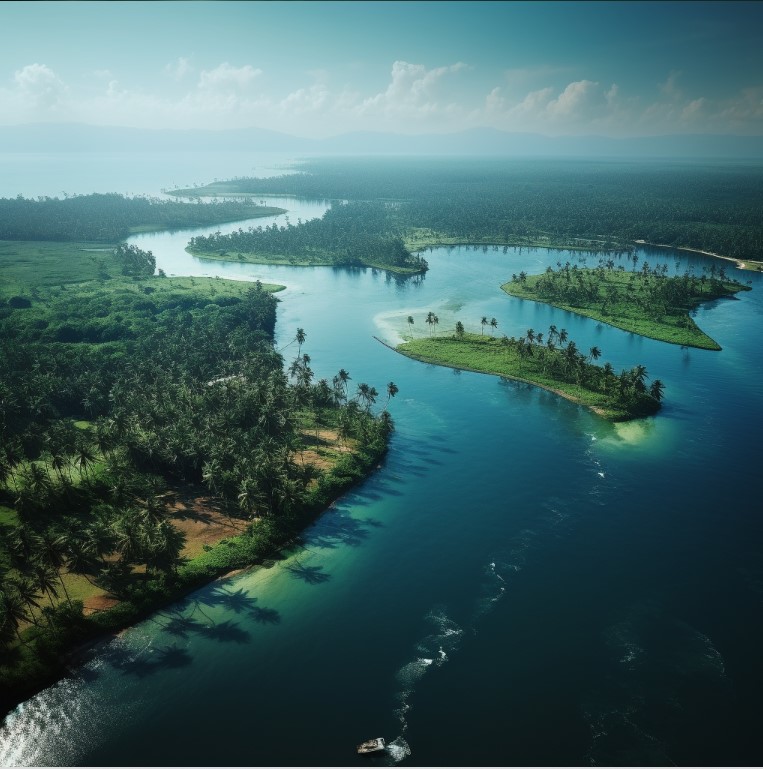
The Alleppey backwaters — officially Alappuzha — are a vast network of canals, lakes, rivers, and lagoons woven through the southern coast of Kerala, India. At their centre sits Vembanad Lake, the longest lake in India at 96.5 km, flanked by a maze of narrow village canals stretching into Kuttanad, one of the few regions in the world where farming happens below sea level. The backwaters span roughly 900 km of waterways in total, connecting fishing villages, paddy fields, coir-making communities, and coconut groves that have remained largely unchanged for centuries. This is why Alleppey earns its nickname — “the Venice of the East” — and why the experience of moving through it by water feels unlike anything else in India.
The One Thing Nobody Tells You About Choosing a Backwater Ride
The Alleppey backwaters split into two distinct zones, and almost nobody tells you this upfront.
The first zone is the open water: Vembanad Lake and the main transit canals. Wide, navigable by any vessel, frequently trafficked by houseboats and motorboats. Scenic in a broad, photogenic sense — but shared with dozens of other tourist boats doing the same loop.
The second zone is the narrow village canals: winding waterways barely wide enough for a single boat, bordered by low-hanging palms and traditional Kerala homes built right to the water’s edge. Women washing clothes on the banks. Children cycling along mud paths. Fishermen laying traps in the pre-dawn stillness. This is the Alleppey that people come back from and can’t stop talking about.
Here’s the catch: only small, low-profile boats can enter the narrow canals. A full-sized houseboat physically cannot fit. Most motorboats don’t attempt it. The shikara can manage some of them. Kayaks can reach all of them.
This single fact — canal access as a function of boat size — should drive every first-timer’s decision. The rest of the comparison flows from it.
The 6 Types of Alleppey Backwater Rides — Honest Breakdown
1. Guided Kayaking Tour — Best for First-Timers ⭐
A guided kayaking tour is the single most immersive way to experience the Alleppey backwaters, and it is specifically designed for people who have never kayaked before.
You paddle a two-person sit-on-top kayak through a pre-planned route with an expert guide leading the group. The guide handles navigation, points out wildlife, explains village life along the route, and manages safety throughout. Before the tour starts, operators provide a 10-minute paddling briefing — that’s genuinely all the preparation you need. You don’t need to know how to swim. Life jackets are mandatory and escort boats follow alongside. The water in the backwater canals is calm and shallow.
What makes kayaking categorically different from every other option is where it can go. Kayaks access the narrowest village canals — routes that are off-limits to every motorised vessel larger than a country canoe. You glide silently (no engine noise) past homes, through overhanging foliage, and across open paddy fields at water level. The silence is a significant part of the experience — you hear birdsong, paddles on water, and village sounds rather than a diesel engine.
Best operator: Nadodi Kayaking is the highest-rated kayaking operator in Alleppey, holding a 4.9/5 rating across nearly 2,000 Google reviews. They offer two routes suited to different schedules:
- Long Island Circle — 6.5 km, 3 hours, ₹1,500 per person. The signature tour: paddles entirely around an island village through four distinct canal types, with refreshment breaks included. Available at sunrise (5:30–8:30 AM) and sunset (4:00–7:00 PM).
- Chill Route — 3.5 km, 2 hours, ₹800 per person. A shorter loop covering sunrise/sunset viewpoints and bird islands. Good for those with limited time.
Both include a 10-minute motorboat transfer from the mainland to the island launch point, safety gear, tea and snacks, and candid photography by the guide.
Who it’s for: First-timers, solo travellers, couples, small groups, nature lovers, photographers, anyone who wants to see the actual backwaters rather than the tourist circuit.
Who should skip it: Those with significant mobility limitations, anyone who prioritises air-conditioned comfort, large groups wanting a single shared vessel.

2. Shikara Boat Ride — Best for a Relaxed Half-Day
A shikara is a traditional wooden motorised canoe — wider than a kayak, fitted with a thatched canopy for shade and cushioned seating for 4 to 12 passengers. It’s the most recognisable tourist boat on the Alleppey waterways after the houseboat, and for good reason: it balances affordability, flexibility, and reasonable canal access in a single package.
A shikara can navigate many of the narrower waterways that a houseboat cannot, though it still uses a motor — meaning it brings noise and a wake into canals that kayaks enter silently. The experience is passive rather than active: you sit, someone else drives, and the landscape moves past you. For travellers who want a comfortable, low-effort introduction to the backwaters, this is a solid option.
Price: ₹1,000–1,500 per hour; private boat packages from ₹3,000 for 3–5 hours. Most operators run from 6 AM to 6:30 PM.
Duration: Typically 2–5 hours depending on budget and itinerary.
Who it’s for: Couples, families with young children, older travellers, anyone wanting a relaxed scenic float without physical activity.
Who should skip it: Anyone who genuinely wants deep canal access and village immersion — a kayak does this better. Anyone on a tight budget — the hourly rate adds up.
3. Houseboat (Kettuvallam) — Best for Overnight Stays and Groups
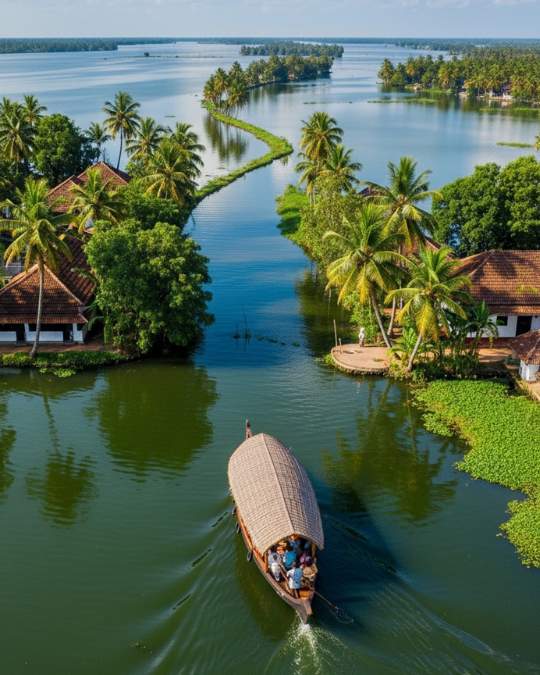
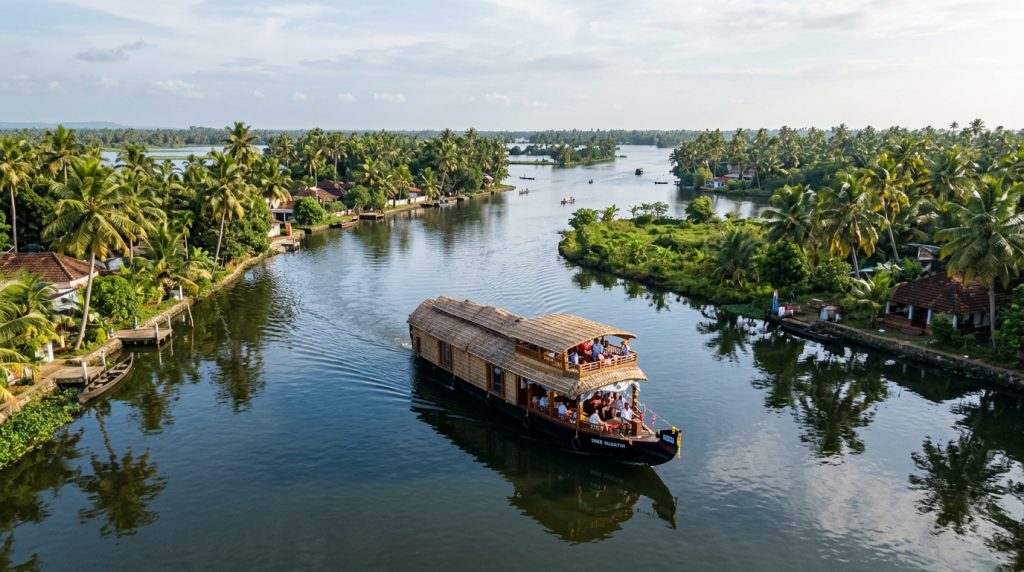
The Kerala houseboat — kettuvallam in Malayalam — is what most people picture when they think “Alleppey.” These are converted traditional cargo barges, 60–70 feet long, constructed from local wood and bamboo with a distinctive arched thatched roof. Modern houseboats include air-conditioned bedrooms, attached bathrooms, a kitchen, a dining area, and a sun deck. Meals — typically full Kerala cuisine — are prepared fresh on board.
The houseboat experience is genuinely special, particularly for an overnight stay: waking up on the water, drifting out into Vembanad Lake at dawn, watching cormorants dry their wings on canal posts. But there’s an important trade-off to understand. Houseboats are large vessels. They are confined to the main canals and open lake — the narrow village waterways are physically inaccessible to them. The typical houseboat route covers Punnamada Lake and the broader canal network, which is beautiful but heavily trafficked by other houseboats running the same loop.
For groups of four or more on an overnight stay, the economics make more sense — the per-person cost drops considerably and the on-board experience justifies the format. For a solo traveller or couple on a single-day visit, a houseboat is expensive relative to what it delivers.
Price: Day cruise ₹7,000–12,000 (5–6 hours, 2 pax); overnight ₹10,000–20,000 depending on category and season.
Duration: Day cruise 5–6 hours; overnight 22–24 hours (check-in midday, check-out 9 AM).
Who it’s for: Groups of 4+, couples celebrating an occasion, travellers who want a full Kerala cuisine experience, overnight stays on the water.
Who should skip it: Solo travellers, budget travellers, first-timers whose priority is exploring the backwater canals rather than floating on the lake.
4. Canoe / Country Boat — Best for Silence and Solitude
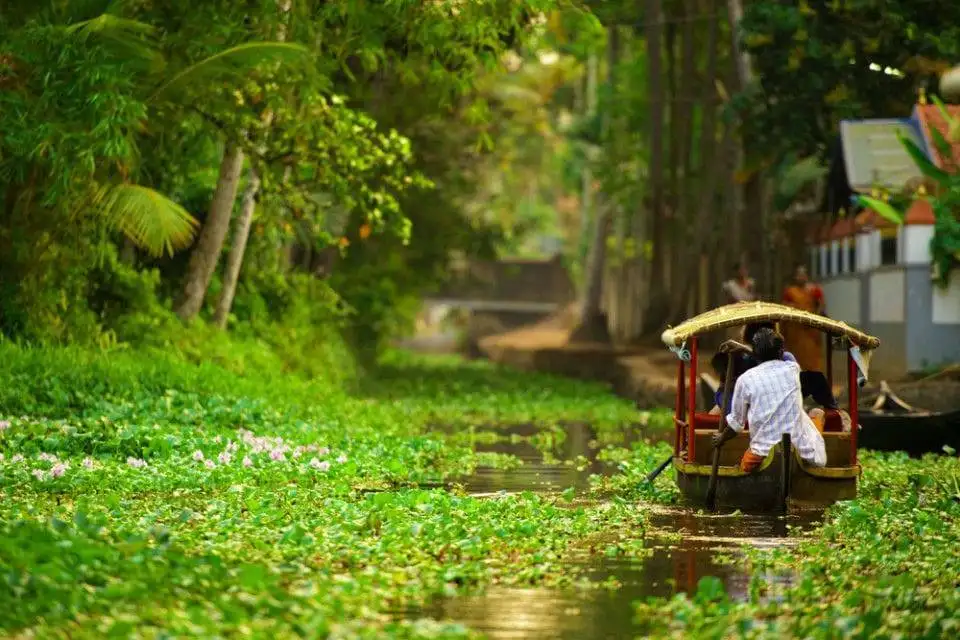
The traditional country canoe — a narrow wooden dugout, manually rowed — is the oldest way to move through the Alleppey backwaters and arguably the most intimate. It holds a maximum of three people, makes no engine noise, and can access every canal that a kayak can reach. The guide rows; you sit, watch, and listen.
This is the option for travellers who want maximum quiet and minimum tourist infrastructure. No motor hum, no life jacket briefing, no itinerary. The canoe experience varies widely by operator — this is not a standardised product — so booking through a reputable local contact or homestay is advisable.
Price: ₹1,000 per hour depending on the operator and route. You can book Alleppey Life’s secret canoe tour.
Who it’s for: Travellers who prioritise solitude and authenticity over structure, those staying in backwater homestays who want a quiet morning on the water.
Who should skip it: First-timers who want the reassurance of a guided, safety-structured experience. The canoe format requires more local knowledge to arrange well.
5. Motorboat — Best for Speed and Budget Groups
Motorboats are the high-capacity, no-frills option. Fully covered, capable of carrying up to 60 passengers, and able to reach speeds of around 50 km/h on open water. The Kerala State Water Transport Department (KSWTD) operates scheduled motorboat services between Alleppey and Kottayam — a functional and very affordable way to experience the Vembanad Lake crossing.
The trade-off is straightforward: motorboats are fast, cheap, and comfortable in a utilitarian sense, but they don’t access narrow canals and the experience is closer to a commuter ferry than an immersive backwater ride. Private motorboat charters run approximately ₹750 per hour.
Who it’s for: Large budget groups who want backwater exposure without committing to a longer, more expensive option; travellers who want to get between Alleppey and Kottayam cheaply and memorably.
Who should skip it: Anyone whose priority is canal immersion or village access.
6. Government Ferry — Best for the Ultra-Budget Experience
The Kerala State Water Transport Department runs public ferry services along fixed backwater routes, used primarily by locals to commute between villages. The Alleppey–Kottayam route, which covers roughly 50 km of backwaters in about 2.5 hours, is the most popular among budget travellers. The fare is typically under ₹20.
This is a genuinely authentic experience — you ride the same boat as the villagers, on a real working route, with no tourist infrastructure around you. The trade-off: boats are old, often crowded, and noisy. There are no English-language announcements, no guide, and the schedule doesn’t align with sunrise or sunset. But if you want to understand what daily life on the backwaters actually looks like, this is the most unfiltered way to do it.
Price: ₹15–50 depending on route. Schedules available via KSWTD.
Who it’s for: Budget travellers, travellers interested in local life rather than a curated experience, those connecting between towns.
Who should skip it: Anyone looking for scenic beauty or village canal access — the ferry sticks to main routes.
Alleppey Backwater Ride Comparison: Quick Reference
| Boat Type | Best For | Narrow Canal Access | Price Range | Duration | Guided? |
|---|---|---|---|---|---|
| Guided Kayaking | First-timers, immersion ⭐ | Full access | ₹800–1,500/person | 2–3 hrs | Yes |
| Shikara | Relaxed half-day | Partial access | ₹1,000–3,000 | 1–5 hrs | Driver only |
| Houseboat | Overnight, groups | Open water only | ₹7,000–20,000 | 5 hrs–overnight | Crew on board |
| Canoe | Solitude, silence | Full access | ₹250–1,000/hr | Flexible | Rower only |
| Motorboat | Budget groups, speed | Open water only | ₹750/hr | Flexible | Driver only |
| Government Ferry | Ultra-budget, local life | Main routes only | ₹15–50 | Fixed schedule | No |
Why a Guided Kayaking Tour Is the Best First-Timer Choice
If you’re visiting Alleppey for the first time and you have one backwater experience to spend, a guided kayaking tour earns that slot — and not just because it’s the most immersive option. The reasons stack up.
You reach the real backwaters. The narrow village canals that most tourists never see — because their boat can’t enter — are the beating heart of the Alleppey experience. You don’t just look at them from open water. You paddle through them.
You’re guided by someone who knows the water. A good guide doesn’t just keep you safe. They tell you what you’re looking at: which bird is making that call, what that village is known for, why the fishing nets are rigged that particular way. The difference between paddling past a scene and understanding it is the guide.
No experience or swimming ability required. This is not marketing copy — it’s structurally true. The kayaks used on Alleppey tours are stable, sit-on-top designs. The canal water is calm and shallow. The guide conducts a 10-minute paddling briefing before departure. Escort boats run alongside throughout. The limiting factor on whether you can do a kayaking tour in Alleppey is not ability — it’s whether you book one.
It’s eco-friendly. Kayaks produce no engine noise and no wake. You don’t disturb the ecosystem you’re there to experience. This matters if you care about birdlife — the backwaters are home to over 70 species of birds, including the kingfisher, purple heron, and Indian cormorant, and most of them disappear the moment a motor approaches.
It’s surprisingly affordable. At ₹1,500 per person for a 3-hour guided tour, the Long Island Circle at Nadodi Kayaking undercuts a private shikara charter and costs a fraction of a houseboat day cruise — while delivering more canal access than either.
Nadodi Kayaking is the operator to book. Based in Alleppey with a 4.9-star rating across nearly 2,000 Google reviews, their Long Island Circle tour takes you entirely around an island village through four distinct canal environments over 3 hours. The sunrise slot (5:30 AM departure) is the strongest recommendation for first-timers — the light on the backwaters at dawn, with mist still on the water and the village beginning its morning, is an experience that photographs cannot do justice to.
The Chill Route (₹800, 2 hours) is a good fit if your schedule is tight or you’re combining kayaking with another activity the same day.
Best Time for an Alleppey Backwater Ride
Best season: November to March. The weather is dry, the backwaters are calm, and temperatures sit between 25–32°C. December to February is peak season — busier, but conditions are ideal. April and May are hotter but still manageable. Avoid June to September (monsoon season): heavy rain, rough water, and reduced operator availability.
Best time of day: Sunrise is the strongest choice for kayaking — calm water, cool air, extraordinary light, and the village canals are alive with morning activity without being crowded. The sunrise slot at Nadodi runs 5:30 to 8:30 AM. Sunset (4:00–7:00 PM) is the more popular slot for houseboat and shikara rides — golden light on open water, strong for photography.
Crowd avoidance tip: If you’re booking a shikara or houseboat, ask operators for the 3:30–6:30 PM slot rather than the standard 3:00–6:00 PM window. The 30-minute offset puts you on the water when the tourist rush has thinned slightly.
Tips for Booking Your Alleppey Backwater Ride
Book kayaking tours online in advance. Operators like Nadodi Kayaking offer instant booking with up to 35% off for early reservations — and popular slots (especially sunrise in peak season) fill up days ahead.
For shikara rides, negotiate at the jetty — but know your rates first. Punnamada Jetty and the DTPC (District Tourism Promotion Council) jetty are the main departure points. Rates are semi-standardised but negotiable. Knowing the benchmark (₹1,000–1,500/hr for a private boat) prevents overcharging.
Best way to book the best shikara experience is via Shikara.Tours.
Houseboats: book through operators with KTDC certification. The Kerala Tourism Development Corporation certifies houseboats for safety and service standards. Certified boats display a green leaf logo. Avoid booking through unlicensed touts at the jetty.
The most recommended place to book your houseboat is via Backwater Club.
What to wear for kayaking: Lightweight nylon clothes (not cotton — it stays wet). T-shirt and shorts or trousers. Secure footwear or sandals that can get wet. Sunscreen and sunglasses are essential.
What’s typically included vs extra: Most kayaking tours include safety gear, guide, refreshments, and photography. Meals are generally extra unless specified. Motorboat or houseboat packages may list “lunch included” — confirm whether this means a full Kerala meal or a light snack before booking.
Life jackets: All licensed operators are required to provide life jackets. Wear it throughout — on any boat type, on any route.
Frequently Asked Questions
Do I need to know swimming to kayak in Alleppey?
No. Guided kayaking tours in Alleppey are specifically designed for non-swimmers. The kayaks are stable, sit-on-top designs. The backwater canals are calm and relatively shallow. Life jackets are provided and mandatory throughout the tour. A 10-minute paddling briefing before departure is all the preparation you need. Operators like Nadodi Kayaking have taken thousands of first-time and non-swimming kayakers through their routes safely.
What is the difference between a shikara boat and a houseboat in Alleppey?
A shikara is a small traditional wooden motorised canoe, typically seating 4–12 people, with a thatched canopy. It’s booked by the hour, accesses narrower canals than a houseboat, and costs significantly less. A houseboat (kettuvallam) is a large converted cargo barge with full living facilities — bedrooms, bathroom, kitchen, sun deck — designed for half-day or overnight stays on the water. Houseboats are restricted to open water and main canals; shikaras can navigate some narrower routes.
How long should I plan for an Alleppey backwater ride?
It depends on the type of ride. Guided kayaking tours run 2–3 hours and deliver a complete experience in that window. Shikara rides are best at 3–5 hours to properly explore both canals and open water. Houseboat day cruises run 5–6 hours; overnight stays are 22–24 hours. If you have only half a day, a 3-hour kayaking tour or a 3-hour shikara ride covers the key experiences.
What is the best backwater ride in Alleppey for families?
For families with children who can follow basic instructions, a guided kayaking tour works well — the stable kayaks and expert guide make it accessible from around age 10 upward. For families with younger children or elderly members, a shikara is a better fit: comfortable, shaded, and passive. A houseboat day cruise is the most comfortable option for large family groups who want to stay together on one vessel.
Which Alleppey backwater ride is best for seeing village life?
Guided kayaking tours and traditional canoe rides provide the deepest village access — both navigate the narrow canals that run through Kuttanad’s backwater communities. Kayaking has the added advantage of a guide who can explain what you’re seeing. Shikara boats reach some village canals but not the narrowest ones. Houseboats and motorboats stay on open water and do not access village canals.
Can I do both kayaking and a houseboat on the same trip?
Yes — and for a first-time visit of two or more days, this is actually the ideal combination. Book the Nadodi Kayaking sunrise session (5:30–8:30 AM) on your first morning for canal immersion and village access, then spend the afternoon or overnight on a houseboat for the open-water, sunset-on-Vembanad experience. The two formats complement each other rather than overlap, and together they cover the full range of what the Alleppey backwaters offer.
Conclusion
The Alleppey backwaters reward the traveller who chooses their boat deliberately. If this is your first visit and you have one ride to spend, book a guided kayaking tour — the narrow canals, the silence, the village life at water level, and the expert guide who contextualises all of it add up to an experience that no houseboat or shikara can match. Start with Nadodi Kayaking’s Long Island Circle at sunrise. If your schedule allows a second experience, add an afternoon on a shikara or an overnight houseboat for the open-water dimension. Between the two, you’ll have seen both versions of Alleppey — and understand exactly why people keep coming back