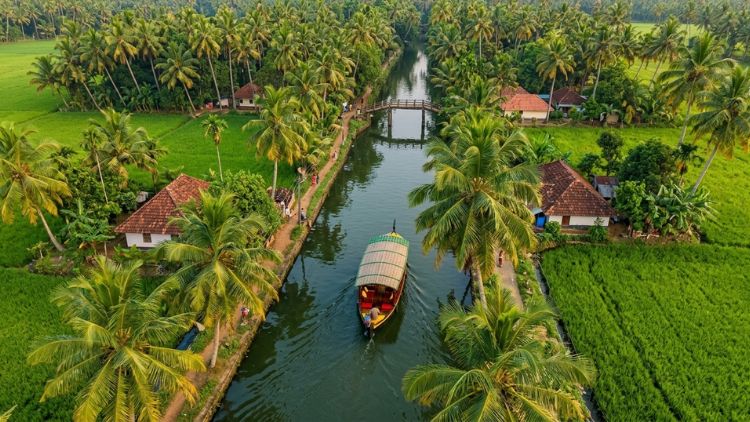
Most visitors to Alleppey book their shikara ride the same way: they show up at the jetty, get approached by someone with a laminated price card, and spend 40 minutes negotiating without quite knowing what they’re getting. The backwaters are stunning regardless — but the experience swings dramatically based on when you go, which route you take, and how you book.
This guide covers all of it: every time slot ranked honestly, the specific named places you’ll pass through, what a fair price looks like, how to book cleanly without the jetty circus, and — if you want to see all of Alleppey in a single day — how to pair a shikara ride with a kayaking tour for a backwater experience that goes places no single boat can cover alone.
What Is a Shikara Boat? (And Why It’s Not a Houseboat)
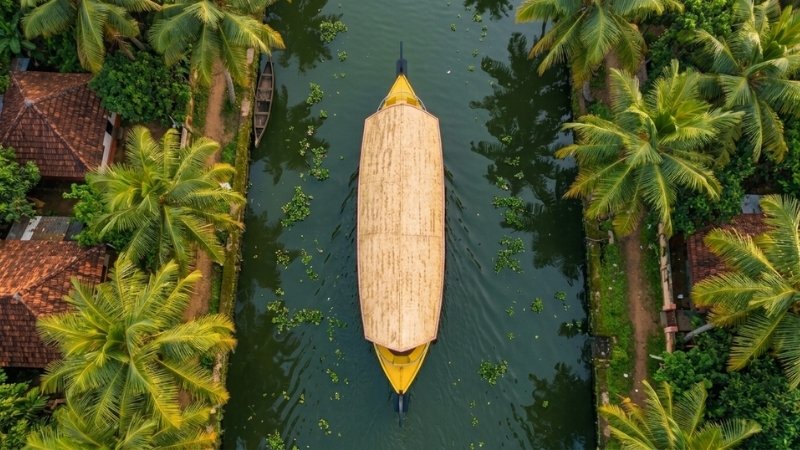
A shikara is a traditional Kerala wooden boat — roughly 25 to 40 feet long, open on all four sides, with a decorative canopy, reclining seats, and a shallow hull that lets it slip through waterways as narrow as 10 metres. The hull is typically carved from Anjili (wild jackfruit) wood and the roof layered with bamboo and palm-leaf weave — functional craftsmanship, not decoration.
That shallow hull is the whole point. Houseboats in Alleppey are impressive floating rooms — 60 to 100 feet of teak, bedrooms, kitchen, crew — but they’re locked to the main lakes and wider channels. A shikara goes where houseboats can’t: the narrow interior canals where village life actually happens, where you’ll glide past people washing clothes on stone steps, kids jumping off low bridges, and fishermen pulling nets in water barely wider than your boat.
| Shikara | Houseboat | |
|---|---|---|
| Length | 25–40 ft | 60–100 ft |
| Capacity | Up to 7–45 people (varies by boat) | Up to 100 |
| Duration | 2–6 hours | Overnight / full day |
| Canals accessible | Narrow + wide | Wide channels only |
| Experience type | Active sightseeing | Leisure, accommodation |
| Price range | ₹3,000–₹6,000 | ₹8,000–₹25,000+ |
| Best for | Day visitors, canal exploration | Overnight Kerala experience |
If you have one full day in Alleppey and want to genuinely see the backwaters rather than float through them, a shikara is the right call.
[Image: Side-by-side comparison of a traditional shikara boat in a narrow canal versus a large houseboat on Vembanad Lake. Alt: Shikara boat in narrow Alleppey backwater canal vs houseboat on open lake]
Shikara Ride Timings in Alleppey — Which Slot Is Right for You?
This is the decision that matters most and the one most guides handle worst, listing slots with generic adjectives (“beautiful sunrise,” “magical sunset”) and leaving you no clearer than before.
Here’s what each slot is actually like — and who it suits.
Sunrise Ride (5:30 AM – 8:30 AM) — Best for Photographers, Birders, and Early Risers
The backwaters at 5:30 AM are a different place. The water is glassy and still — no wake from motorboats, no tourist traffic, just the sound of oars and whatever birds are calling from the reeds. On Punnamada Lake, the light comes up slowly behind the coconut palms and turns everything amber for about 20 minutes. That’s the shot that earns the likes.
Beyond aesthetics, this slot has practical advantages: the air is genuinely cool, the boatman has your full attention rather than managing a crowd, and you’re back in time for breakfast and the rest of your day. If you’re a birdwatcher, this is non-negotiable — Pathiramanal Island sees peak migratory bird activity in the early morning hours.
The trade-off is obvious: you’re setting a 4:30 AM alarm in a place you probably travelled far to relax in. Worth it if that’s your style; skip it if you need sleep.
Lunch Ride (11:30 AM – 2:30 PM) — Best for Families and Culture-Focused Travellers
Midday on the backwaters is the most honest version of Alleppey. Markets are open along the canal banks. Locals are moving — on boats, on bicycles along raised bunds, pulling nets, loading produce. You’re seeing the backwaters as they actually function, not as a backdrop for golden light.
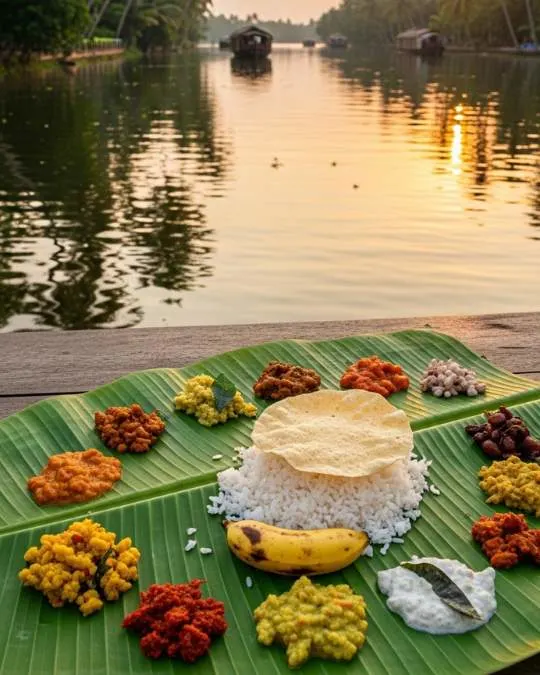
The heat is real. Between noon and 2 PM the sun is directly overhead and the canopy on a shikara provides shade but not much airflow if you’re on the open lake. The canal sections are better — trees overhang, the water is narrower, there’s natural shade.
For families with children, this slot works well. Kids find the activity on the water more engaging than the stillness of dawn, the ride ends before anyone gets too tired, and you have the full afternoon free.
Sunset Ride (4:00 PM – 7:00 PM) — Best for Couples, First-Timers, and Anyone Who Wants the Iconic Shot
The most popular slot for a reason. The temperature drops from around 4 PM, the light turns golden, and Vembanad Lake — India’s longest lake — becomes a mirror that catches the entire sky. The coconut trees along the bank go into silhouette. If you’ve seen photos of the Alleppey backwaters and thought “I want that,” this is when that photo is taken.
Practically: this slot books fastest, especially on weekends and between October and March. If you want the 4 PM start, book it in advance. Showing up at the jetty at 3:30 PM hoping to negotiate is how you end up on a boat you didn’t choose, with a boatman who’s doing his fifth trip of the day.
The canal villages are quieter at this hour than midday, but you’ll often stop at a toddy shop along the route — a small, waterfront family operation serving Kerala-style snacks and fresh toddy, which is one of those experiences that doesn’t appear in brochures but is consistently the thing people mention in their reviews.
Full Day Cruise (11:00 AM – 4:00 PM) — Best for Travellers with a Full Free Day
At five hours, this is the only slot long enough to do both the open lake and the deep canal routes properly. You’ll cross Punnamada Lake, spend time on Vembanad, navigate into the Kainakary interior canals, and typically stop at Pathiramanal island or a canal-side restaurant for lunch.
The full day cruise is for travellers who aren’t rushing anywhere and want to settle into the rhythm of the backwaters rather than check them off a list. It’s also the right choice if you’re travelling with older family members or anyone for whom the early alarm of the sunrise slot isn’t realistic.
What You’ll See — Routes and Highlights of the Alleppey Backwaters
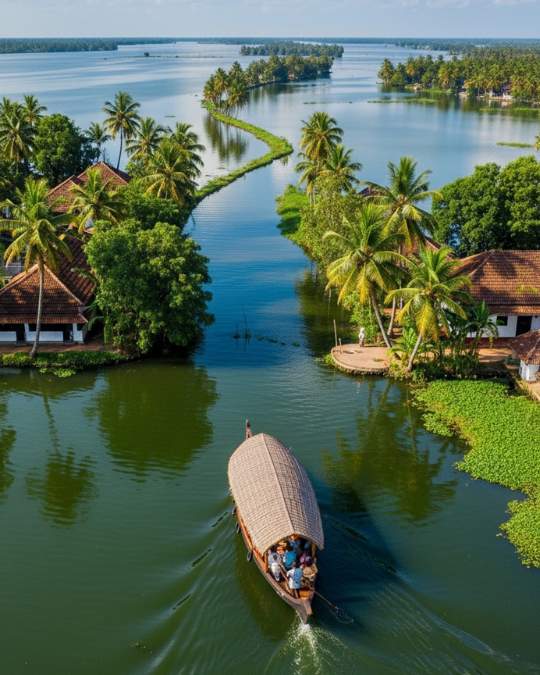
Shikara rides in Alleppey follow a loose geography that most operators share. The starting point for most tours is near Punnamada — the same area where the Nehru Trophy Snake Boat Race is held every August — and the route branches depending on duration and time of day.
Here are the specific places you’ll pass through and why each one is worth knowing about before you go:
Punnamada Lake is the opening act — a wide, open expanse where you get your first sense of the scale of the Alleppey backwaters. The lake sits at sea level and connects to Vembanad to the north. In August, this is the Snake Boat Race venue; the rest of the year it’s quiet and wide open, which is part of why the sunrise light here is so good.
Narrow canals of Kainakary village are where the shikara earns its reputation. These are the waterways — some only 8 to 10 metres across — where the canal banks are close enough to touch, where you pass under old stone bridges, and where houses face the water rather than a road. This is what houseboats can’t access.
C-Block paddy fields are one of the stranger and more memorable sights on the route. The paddy cultivation here happens below sea level — fields that sit lower than the water alongside them, held back by earthen bunds. The geometry of it is surreal from a boat: water on one side, fields below you on the other.
Vembanad Lake is India’s longest lake at roughly 96 km end to end, though most shikara routes only skim its edge or cross a section of it. On a clear day the far shore disappears into haze. The sunset over Vembanad — nothing on the horizon, just water and light — is the image most people take home.
Pathiramanal Island (literally “midnight sand” in Malayalam) is a small island in Vembanad Lake that serves as a stopover for over 90 species of migratory birds from Siberia and other northern regions. Most longer tours stop here; the sunrise ride has the best chance of seeing peak bird activity. Entry is free; walking trails are basic but the bird density in the early morning is genuinely impressive.
Village life along the route — toddy tappers climbing palms to harvest sap before the heat sets in, women weaving coir rope from coconut husk on their porches, ducks being herded in formation across the water by a single farmer in a narrow canoe — is the texture that no brochure adequately prepares you for. It’s ordinary life, running parallel to the water, and the shikara gets close enough to see it properly.
Shikara Ride Price in Alleppey — What to Actually Expect
Pricing for shikara rides in Alleppey isn’t standardised, and the range you’ll see quoted online reflects genuine variation across boat sizes, operators, and seasons.
Fixed-package pricing (most reliable)
Most reputable operators, including Shikara.Tours, quote fixed prices per boat for a standard 3-hour or 5-hour experience rather than open-ended hourly rates. This is the cleaner option — you know exactly what you’re paying, there’s no ambiguity at the end of the ride, and the boatman isn’t watching the clock.
General market rate reference:
| Duration | Approximate Rate (per boat) |
|---|---|
| 2 hours | ₹1,600 – ₹2,200 |
| 3 hours | ₹2,400 – ₹4,000 |
| 5 hours (full day) | ₹4,000 – ₹6,000 |
Rates vary by boat size. Shikara.Tours operates small boats (up to 7 people), medium boats (up to 20), and large cruise boats (up to 45) — the right boat is matched to your group size automatically.
Peak season and weekend uplift
October to March is peak season. Weekends and public holidays push prices up by roughly 20–30% and — more importantly — the boats that match your timing preference get booked out. This is the most practical reason to book in advance online rather than sorting it at the jetty.
What’s typically included: boat, boatman, life jackets, and the route. Food, toddy stops, and additional canal exploration are usually separate or operator-dependent.
Shikara.Tours deposit model: ₹250 secures your slot instantly. The balance is paid on the day. WhatsApp support is available throughout, and confirmation is immediate after booking.
How to Book a Shikara Ride in Alleppey (Without Wasting Your Morning at the Jetty)
Here’s the part most guides skip because it doesn’t make for pleasant reading.
The area around Alleppey boat jetty has a well-documented tout problem. Travellers arriving without a booking get approached by men with laminated cards, friendly opening lines, and a strong commercial interest in putting you on a specific boat regardless of what you actually want. It’s not dangerous — it’s just time-consuming, opaque, and likely to end with you on a shared boat you didn’t ask for, at a price that felt negotiated but wasn’t really.
Beyond the touts, even genuine direct bookings at the jetty on the day have a core problem: on weekends, holidays, and between November and February, the sunrise and sunset slots fill up. People who booked online two days earlier have the 4 PM sunset locked in. You arrive at 3 PM and what’s left is the mid-afternoon slot that nobody else wanted.
The case for Shikara.Tours
Shikara.Tours is a direct operator — no brokers, no intermediaries — running private shikara rides from Punnamada, Alleppey. The booking flow is clean: pick your ride type, set your group size, select a date, pay a ₹250 deposit. That’s it. You get instant confirmation, a WhatsApp line to the team, and a meetup point with Google Maps directions.
What makes it worth recommending specifically — beyond the convenience — is the private ride guarantee. Every booking on Shikara.Tours is private to your group. No strangers added to fill the boat, no compromise on your pace or route. For families, couples, or anyone who booked this trip carefully, that distinction matters.
The operator has completed 500+ bookings and is rated consistently on Google. Reviews cite specifically: the cleanness of the boats, the friendliness of the crew, and the fact that what was promised was what happened — which sounds like a low bar until you’ve read enough backwater tour reviews to know it isn’t.
Step-by-step booking:
- Go to Shikara.Tours
- Select your preferred ride (Sunrise, Lunch, Sunset, Full Day, or Custom)
- Enter your group size — the right boat is matched automatically
- Pick your date
- Pay the ₹250 deposit to confirm
- Receive WhatsApp confirmation with meetup details
- Pay the balance on the day at the Punnamada starting point
[Image: Screenshot of the Shikara.Tours booking page showing the four ride options with timings and the group size selector. Alt: Shikara.Tours online booking page for Alleppey shikara rides]
What to Bring on Your Alleppey Shikara Ride
The basics are straightforward, but a few details are easy to get wrong.
Clothing: Light cotton or linen — anything that breathes in Kerala humidity. Avoid synthetics; they trap heat. A thin layer for the early morning sunrise slot if you run cold. Slip-on footwear for stepping on and off the boat at jetties without ceremony.
Sun protection: The canopy gives shade but not full cover, especially on the open lake sections. Sunscreen, sunglasses, and a hat are non-negotiable for the lunch and full day slots. Less critical for sunrise (cool, low sun angle) but still worth having.
Phone and camera: Keep them in a waterproof pouch or zip-lock bag as a baseline. It’s rare for water to come into the boat, but spray on Vembanad Lake is possible on windier days. A power bank if you’re shooting all morning.
Water: Bring at least 1 litre per person. The boatman won’t have it. Some operators offer a cold drinks stop along the route; don’t rely on it.
Monsoon season additions (June–September): A compact umbrella or light raincoat. Quick-dry footwear. The backwaters in monsoon are genuinely beautiful — lush, dramatic, green in a way the dry season can’t replicate — but rain showers arrive without warning and a standard canopy won’t keep you completely dry.
What not to bring: Large bags, valuables you’d stress about getting wet, or anything that creates anxiety about the environment you’re in. This is a boat trip on calm water, not an expedition.
Want to See Everything? Combine a Kayak Tour with Your Shikara Ride
A shikara covers the Alleppey backwaters beautifully. A kayak covers the parts a shikara can’t.
That’s not a criticism of either — it’s the point. The two boats are built for different water. A shikara, even a small one, is still a boat with a motor and a boatman. It’s the right tool for covering distance, crossing open lakes, and experiencing the backwaters at a comfortable pace. What it can’t do is silently edge through a canal so narrow that your paddle brushes both banks, or stop in the middle of an island village with no engine to kill.
Kayaking through Alleppey — specifically the routes that go around and through the island villages — gets you to places that are genuinely inaccessible any other way. The paddy field interior, the narrow passages between village houses, the bird islands you can glide up to quietly enough not to disturb anything.
Nadodi Kayaking runs two routes from the same Punnamada area:
- Long Island Circle (3 hours, ₹1,500/person): A 6.5 km loop around an island village through narrow canals, with multiple breaks, free toddy tasting, snacks, tea/coffee, and guided photography. The only kayak tour in Alleppey that circumnavigates an island village.
- Chill Route (2 hours, ₹800/person): A shorter version covering sunrise/sunset points, narrow canals, and mini islands. Good for first-time paddlers or anyone who wants a taste without committing to a full morning.
Both routes include life jackets, a guide, candid photography, and boat transport to and from the island start point. No swimming ability required.
The paired day plan:
The cleanest combination — and the one that lets you experience the full range of what Alleppey’s backwaters offer — is to book opposing slots:
| Option | Morning | Afternoon/Evening |
|---|---|---|
| Early bird | Nadodi Kayaking — Sunrise route (5:30–8:30 AM) | Shikara.Tours — Sunset ride (4:00–7:00 PM) |
| Relaxed start | Shikara.Tours — Lunch ride (11:30 AM–2:30 PM) | Nadodi Kayaking — Sunset route (4:00–7:00 PM) |
| Full immersion | Nadodi Kayaking — Sunrise route (5:30–8:30 AM) | Shikara.Tours — Full Day (11:00 AM–4:00 PM) |
Both operators depart from the Punnamada area, so there’s no cross-town logistics involved. The gap between sessions is time for breakfast, rest, or exploring Alleppey town.
This combination gives you the open lake in golden light, the interior canal villages at water level, the bird island, the paddy fields, and the sunset over Vembanad. If you’re spending one full day in Alleppey, this is how to use it.

Frequently Asked Questions
How much does a shikara ride cost in Alleppey?
A 3-hour shikara ride in Alleppey typically costs between ₹2,400 and ₹4,000 per boat, depending on the operator and season. Rates go up by roughly 20–30% on weekends and during peak season (October to March). Shikara.Tours charges a ₹250 deposit to confirm your booking, with the balance paid on the day. Prices are per boat, not per person — the same boat cost covers your full group.
How long should a shikara ride be?
Three hours is the practical minimum to get through Punnamada Lake and into the interior canals with enough time to stop and take it in. Five hours (the full day option) is the right choice if you want to reach Pathiramanal Island, explore Kainakary village properly, and cross Vembanad Lake. If you’re pairing it with a kayak tour, a 3-hour slot in either direction works well.
How many people can fit in a shikara?
It depends on the boat. Small shikaras seat up to 7 people; medium boats take up to 20; larger vessels accommodate up to 45. Shikara.Tours automatically matches your group to the right boat size when you enter your group number at booking. All rides are private — no strangers added to fill capacity.
Is a shikara ride safe for families and children?
Yes. Shikaras are flat-bottomed boats on calm backwater — there’s no significant swell, no strong current, and reputable operators provide life jackets for all passengers. The boats are stable enough that children can move around carefully. Avoid the open Vembanad Lake crossing in monsoon if there’s any significant wind. If in doubt, the boatman will advise on conditions before departure.
What is the best time of year for a shikara ride in Alleppey?
October to March is peak season — dry, cool weather, clear skies, and the most photogenic conditions on the backwaters. November through February is the sweet spot. Monsoon (June to September) offers a completely different experience: the backwaters turn intensely green, the skies are dramatic, and crowds are thinner — but rain showers are a given. Avoid heavy rain days; the canopy gives partial cover but won’t keep you dry in a downpour.
Shikara vs. houseboat — which should I choose?
Choose a shikara if you have one day in Alleppey, want to see the narrow interior canals, or are visiting as a day-tripper. Choose a houseboat if you want an overnight experience with meals, air-conditioning, and the luxury of drifting slowly across the open lake. They’re not competing products — they offer genuinely different experiences. Many travellers do both: a houseboat overnight followed by a morning shikara ride into the canals the houseboat couldn’t reach.
Can I do a shikara ride during monsoon season?
Yes, with caveats. The backwaters during monsoon (June–September) are lush and dramatic in a way that’s genuinely worth seeing. Crowds are thinner and prices are lower. The honest trade-off: expect rain showers, bring a compact umbrella, and accept that some days will be overcast and grey rather than golden. Avoid the open lake portions in high wind. Shikara.Tours operates year-round; specific conditions are communicated via WhatsApp before your slot.
Plan Your Backwater Day
Alleppey’s backwaters don’t disappoint — but the quality of the experience is almost entirely determined by decisions made before you step onto the boat. The right timing for your travel style, a clear-eyed view of what the route actually covers, and a booking confirmed before you arrive rather than negotiated at the jetty on the day.
For the shikara ride, Shikara.Tours is the cleanest way to lock in your slot — private boat, instant confirmation, ₹250 to secure it. If you want the full day on the water, pair it with a Nadodi Kayaking session at the opposite end of the day and you’ll cover everything Alleppey’s backwaters have to offer.
The backwaters have been here for centuries. They’ll reward whoever shows up prepared.